

Why Tenerife Gets Under Your Skin
What’s the thing about Tenerife that nobody really knows how to explain? It’s not the beaches, although some of them are genuinely good, and it’s not the weather either with it’s more than fair share of sunshine all year round. It’s something harder to pin down. A kind of ease that gets into you slowly, and then you miss it when it’s gone.
The South Is Easy, and Easy Isn’t a Bad Thing
People say “the south” like it’s a dirty word, referring to it like a label for failure. I think that many people are missing the point and need to zoom out.
The south does what it does well and was designed specifically built up for tourism. It caters for people from every walk of life and people visiting can expect to find what their holiday was booked for.
What it isn’t good for is pretending you’ve seen Tenerife when in reality, there is much more to the island than the south.
What the North of Tenerife Actually Gives You
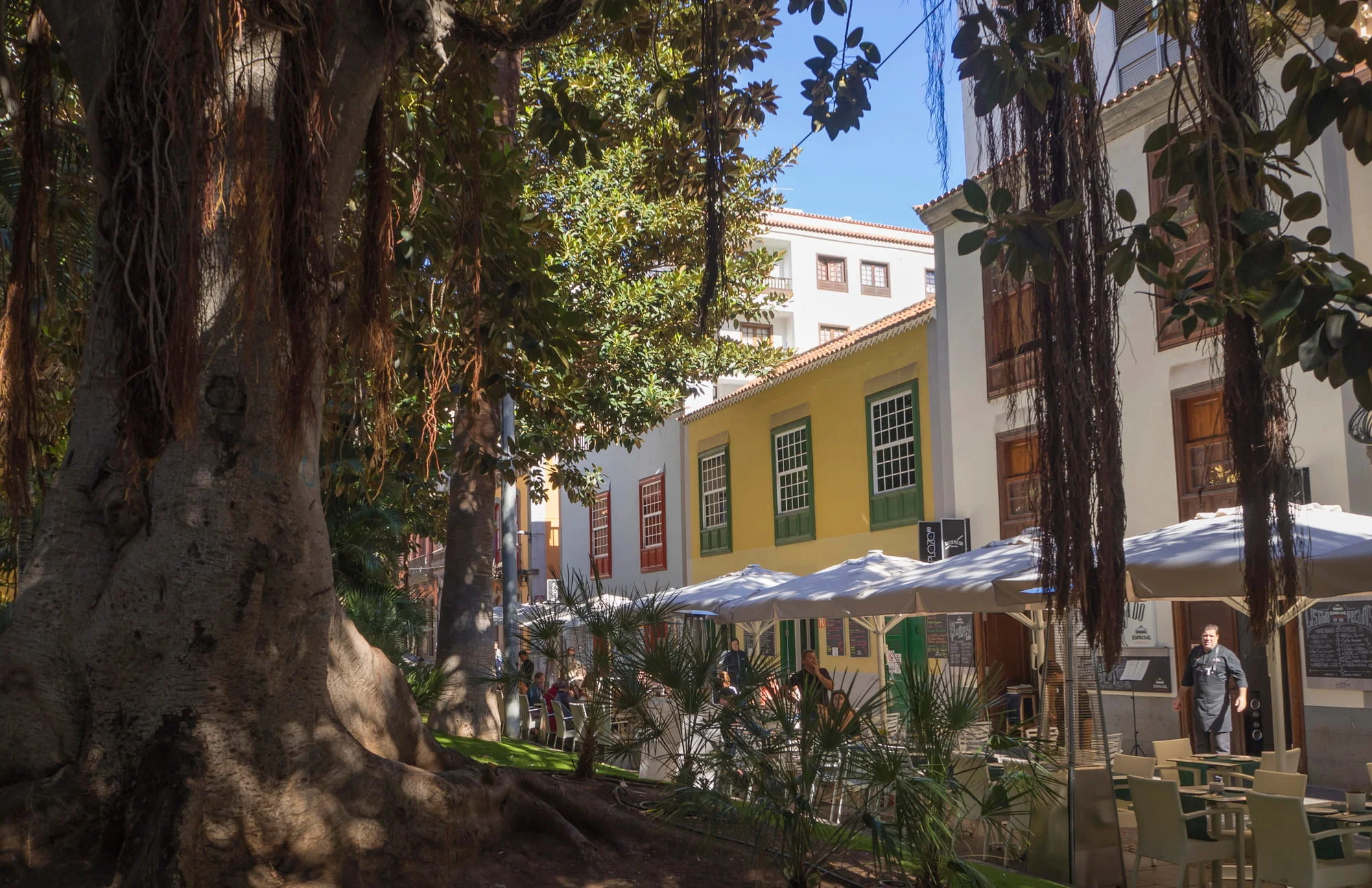
Towns like La Orotava never try to get your attention. On clear mornings the light comes through the banana plantations in a golden, slightly hazy way that makes everything feel a bit slower than it should. The streets are steep and narrow, with the smell of old stone and something faintly floral and the balconies covered in carved wooden latticework that locals have been maintaining for centuries.
The north is greener and cooler than the south too and you’ll find the food caters more for locals rather than tourists which benefits from lower prices. The clouds sit lower, the food is more local, and the prices are a bit easier on the wallet. Life happens at a slower pace and some have even said that it’s almost like visiting a completely separate island when the north and south of the island is compared.
The Weather Thing Everyone Gets Wrong
The south is reliably dry but the north gets much more rain, especially in winter which is why the difference in landscape and lush green flora in the north is very different to the arid landscape of the south. The laurel forest of the Anaga peninsula in the north east is frequently wrapped in cloud and mist and is not what many would expect to see on an island like this when their base is in the south.
The Spanish Meteorological Agency has forecasts for different parts of the island and it’s worth checking before you plan a day in the north or up near Teide. There is also a Tenerife weather guide for year round averages you can use as a gauge for both north and south of the island.
Why Teide Keeps Pulling People Back
The landscape up at Teide is genuinely strange and almost like on another planet. With black and red volcanic rock and almost nothing growing, the silence up there can be deafening and eerily so.
When the light of the day changes, so too do does the surrounding landscape. Early dawn brings a mixture of rust and ochre, with a deep, almost purple black overlay, but by midday it looks completely different and somehow, less alive.
The cable car takes you to about 3,550 metres, but to reach the actual summit you need a permit, and they’re limited. You can book through the Teide National Park website, and I’d genuinely recommend doing it at least once. Standing at the top, above the clouds, with the Atlantic spread out below you in every direction, is one of those moments that’s hard to explain to someone who hasn’t done it.
The Food Rewards Patience
After the first couple of trips to the island, people often want to be a bit adventurous and try different things when it comes to food and they’re more confident and relaxed.
If you’ve never tried it before, Canarian food should be tasted at least once so that you have first hand experience of it. There are different dishes that are worth trying so you don’t have to be stuck with just one or two. There is a good variety on the island ranging from fresh fish, to juicy steaks that fill large plates as single portions so your appetite will be easily satiated.
What Actually Makes People Come Back to Tenerife
From my own experience and also after talking with people who have shared their own thoughts, this is what I feel is the reason.
Tenerife is one of those places that gives you more the more you pay attention. First visit, you see the surface. The beach, the pool, the promenade. Second visit, you start to notice things. The way the light changes in the afternoon. The village you drove past and meant to stop at. The trail someone mentioned that you never got round to.
By the third or fourth visit, you’re not a tourist any more but simply someone who goes there. You have a favourite café or bar you frequent and probably know the owner personally. Your knowledge of the roads and where the shortcuts are to avoid traffic come in handy, unlike new visitors who are yet to get acquainted with the way of life on the island.
The knowledge people gain over time through several visits has built their familiarity of the island which is now considered a second home. They know like all other destinations, the island is not going to be perfect but they almost know this turf like the back of their hands and have built up friends and acquaintances on the island that are now lifelong. This I feel is what draws people back to Tenerife.
Life is less hectic and slows down considerably when compared to their home countries because the island is more for living and forgetting about those daily worries.
One Last Thing
I was talking to someone the other day who’d just booked their seventh trip to Tenerife and were slightly embarrassed about it because they felt they should be trying somewhere different. What I told them was this: there are no prizes for novelty. If a place makes you feel good and you feel you’re only scratching the surface of what it can offer you, that’s not a failure of imagination. That’s just knowing what you like most.
Not everyone likes Tenerife, but for those who do, it often gets under their skin, and once it does, you’ll understand why the island is still a popular destination.