


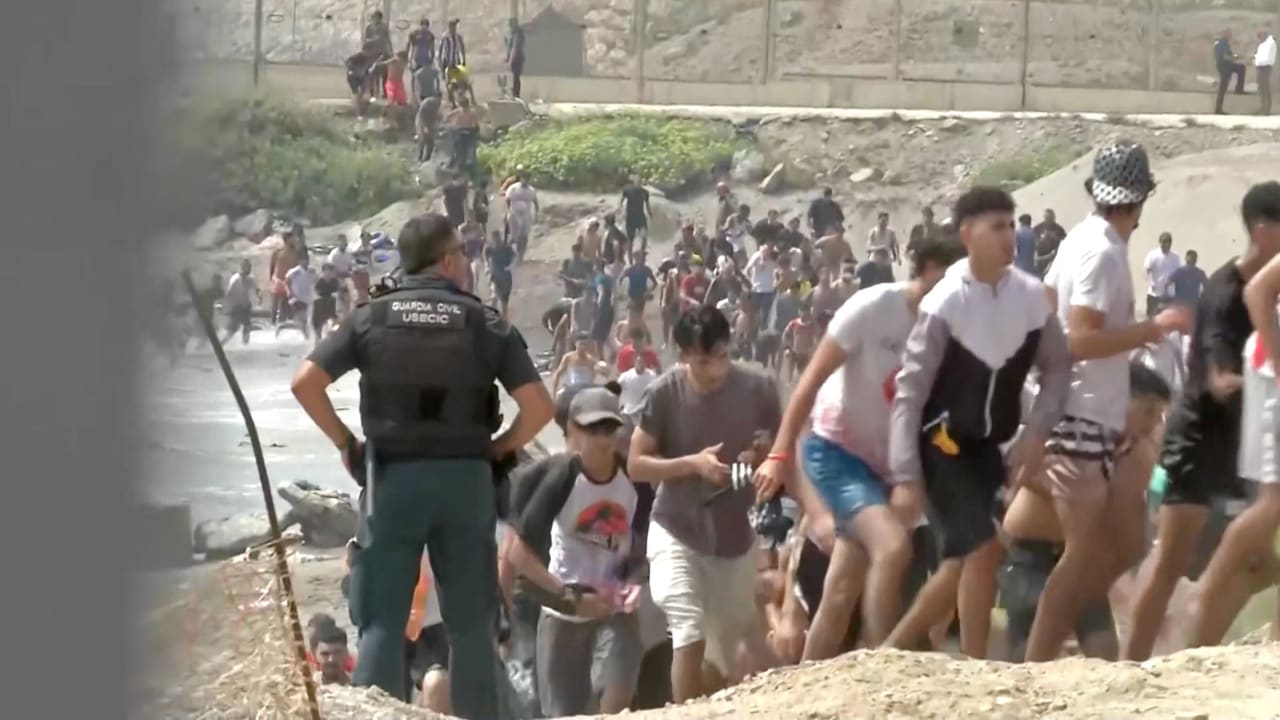
With the current crisis in Ceuta and over 60,000 immigrants breaching the border the question of Spain handing over both enclaves to Morocco is more pronounced than ever.
The Geography Argument Feels Obvious Until You Sit With It
Both cities sit on the African continent. Physically surrounded by Morocco. On a map they look like a mistake, two small blobs of European Union territory that someone forgot to erase. Morocco has been making formal claims to them for decades, and honestly, if you only looked at a map, you’d probably think they had a point.
But geography has never been a clean way to decide who owns what. If it were, we’d have to have a very different conversation about a lot of places. The question isn’t just where something is on a map. It’s who’s been there, for how long, and what those people actually want. That last part tends to get skipped over entirely, and that’s what bothers me most about this debate.
The People Who Live There Keep Getting Left Out of the Conversation
About 85,000 people live in Ceuta. Another 85,000 in Melilla. Spanish citizens, all of them. They vote in Spanish elections, hold Spanish passports, pay Spanish taxes. A lot of their families have been there for generations. When you ask them whether they want to become part of Morocco, the answer is pretty consistent, and it isn’t yes.
I’ve seen this debate play out in opinion columns, in parliament, on Spanish television, and the thing that strikes me every time is how rarely anyone actually talks about these people as people. They get mentioned briefly, then set aside, while everyone gets back to discussing migration numbers and diplomatic optics and border infrastructure costs. As if 170,000 residents are a footnote rather than the entire point.
If you think their wishes shouldn’t be the central consideration here, I’d genuinely like to hear the argument. Because I can’t make it work.
The Migration Argument Is Doing a Lot of Heavy Lifting It Can’t Actually Support
Here’s the version of the argument that sounds most reasonable: Ceuta and Melilla are EU territory sitting on the edge of North Africa. People trying to get into Europe see them as a door. Enormous amounts of money go into fences, border police, surveillance, and legal proceedings. If the cities became Moroccan, that door disappears. Spain saves money. The pressure eases.
Except it doesn’t. That’s not how this works.
The people trying to reach Europe aren’t going to stop trying to reach Europe because one route got closed. We know this because we’ve watched it happen over and over again. Tighten one border and crossings increase somewhere else. The networks that organise these journeys are not rigid. They adapt. The moment Ceuta and Melilla stopped being viable, boats would head for the Canary Islands, or the mainland coast, or Italy. Some of them already do.
And the reasons people are leaving their home countries in the first place, the violence, the poverty, the political collapse, those don’t change because a line moved on a map. Ceuta and Melilla are a symptom. Treating them as the cause is a way of feeling like you’ve done something without actually doing anything.
What Spain Would Actually Be Walking Away From
Ceuta has been under Spanish control since 1668. Melilla since 1497. I want that to land for a second. That’s older than most countries’ entire recorded histories. These aren’t recent colonial holdings or temporary administrative arrangements. Generations upon generations of people have been born, lived, and died there as Spanish citizens.
There’s also the military and strategic side of it. The Strait of Gibraltar is one of the most important shipping lanes in the world, and Spain having a presence on the southern side of it isn’t an accident. It’s deliberate. It matters. And here’s something that tells you a lot about how seriously Spain takes this: almost every major political party, left and right, agrees the cities should stay Spanish. In a country where the left and right agree on almost nothing, that near-total consensus is significant.
The Gibraltar Thing, Since Someone Always Brings It Up
Spain’s longstanding position on Gibraltar is that a piece of British-controlled territory on the Iberian Peninsula should, eventually, come back to Spain. It’s geographically Spanish, historically Spanish, and so on. Morocco says more or less the same thing about Ceuta and Melilla. Spain rejects that claim while making a structurally similar one in the other direction.
I’m not saying that makes Spain straightforwardly hypocritical. The histories are genuinely different, the legal frameworks are different, and I don’t think the situations are identical. But I do think Spain knows exactly how that tension looks from the outside, and I think it makes them uncomfortable, as it should. It should be part of every honest discussion of this topic, and it usually isn’t.
Where I Actually Land on This
Before I mention the position, the ongoing border breach in Ceuta is immense and will take a lot of time to find a solution.
Spain shouldn’t hand them over. I’ll just say that clearly.
Not because Morocco’s frustration is baseless. Not because migration pressure isn’t a real problem that deserves real solutions. But because the residents of those cities are Spanish, have been Spanish, and don’t want to be anything else. That has to count for more than the diplomatic convenience of making an awkward map look tidier.
What would actually help is proper cooperation between Spain and Morocco on managing migration. More investment in the places people are desperately trying to leave. Less of the recurring cycle where these two cities get treated as pawns in a bigger argument and then forgotten about until the next time someone climbs a fence on camera.
Giving up Ceuta and Melilla wouldn’t fix migration to Europe. It would just move the problem 200 kilometres to the left, and leave behind a lot of very angry Spanish citizens who never asked to be bargained away. The people of both cities have said this clearly, repeatedly, and they deserve to be heard.
The debate will circle back around. It always does. But when it does, maybe the first question shouldn’t be what’s convenient for the politics. Maybe it should be what actually happens to the people already living there. That answer, at least, is pretty clear.