



Something shifted. I can’t pinpoint exactly when, but somewhere between the third bag fee and the forty minute security queue that moved about six inches in the time I could have watched an entire episode of something, travel started to feel like a thing you survive rather than enjoy. If you’ve felt that too, then stick with me.
The Airport Has Always Been Awful. You’ve Just Started Noticing.
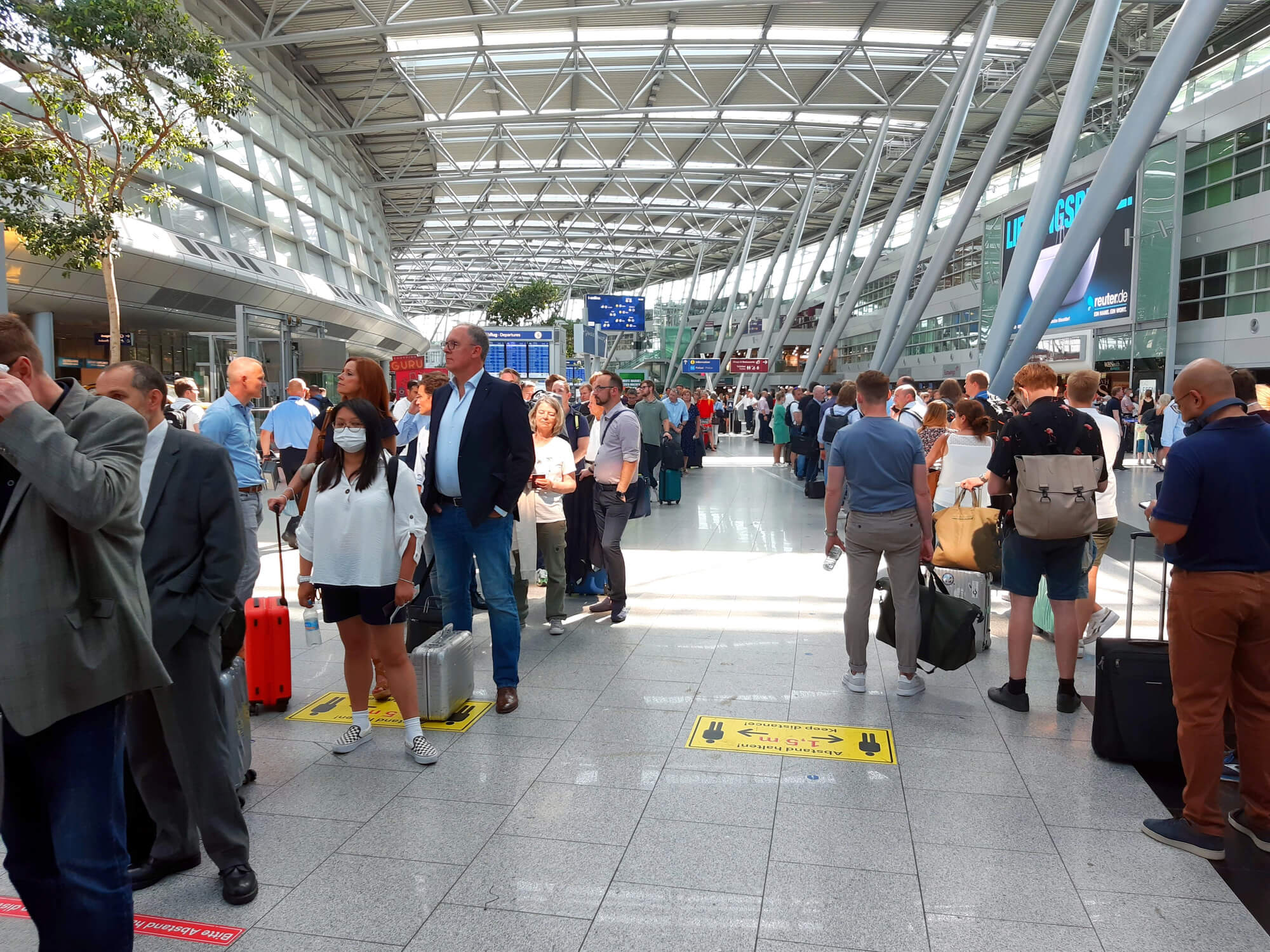
Nobody wants to hear this, but airports were never good. Not in the nineties. Not before smartphones. Not in whatever soft-focus era your parents get misty-eyed about. The food was bad, the seats were hard, and the single departure board everyone had to squint at was surrounded by a queue just as long as any queue today. We’ve romanticised it because we remember the feeling of going somewhere, not the grim infrastructure we walked through to get there.
What’s changed is the expectation. Somewhere along the way airports started pitching themselves as part of the experience. Artisan coffee. Luxury perfume halls. Those spa lounges you have to pay extra to sit in, which I have never once seen anyone actually using. They told us it could be pleasant. Now when it isn’t, which is basically always, we feel like something’s been taken from us.
Then there’s the phone. You’re refreshing the app, reading about a delay on Twitter before the airline has said anything official, watching a thread of people catastrophising in real time, and by the time you reach the gate you’re already worn out. You haven’t even boarded yet.
The Civil Aviation Authority’s own data flags security wait times and signage as the biggest stress points. Neither of those is new. What’s new is that you now have a device in your pocket that lets you pre-stress about them before they’ve happened.
The only thing that actually works is lowering your airport expectations to somewhere near the floor. Eat before you go. Pack snacks. Download something. Accept that it’s going to be a bit grim and stop being startled every time it is.
Why Everything Costs So Much More Now
Flights are expensive. Hotels are expensive. Car hire has become almost a joke, and not a funny one.
But the price itself isn’t the part that’s making people angry. It’s the way the price is hidden from you until the very last screen. Budget airlines cracked the code on this years ago.
The headline fare gets you to click. Then it’s the bag. Then it’s the seat selection, because apparently sitting next to a stranger is now a premium service. Then priority boarding, which I’ve always suspected exists mainly to make the people who didn’t pay for it feel vaguely punished while they stand in a second queue watching the first queue board.
By the time you’ve added everything a normal person actually needs for a week away, you’ve spent more than a full-service carrier would have charged. You haven’t saved money. You’ve just paid for it in small, irritating pieces.
Hotels learned the same trick. The nightly rate looks manageable. Then at checkout there’s a city tax, a cleaning fee, a resort fee, and something called a facility charge that I genuinely asked about once and the man at the desk looked at me like I’d asked him to explain the origin of the universe.
I’ve started assuming the real price is roughly 25% higher than whatever I see first. It’s a depressing way to plan a trip. It’s also accurate.
Here’s the honest version of what happened. Travel got very cheap for a while. Probably cheaper than it should have been given what it actually costs to move a plane full of people across Europe. Then fuel went up. Staffing went up. Post-pandemic demand came back like a wave.
Prices followed and they’re not dropping back to 2018 levels. The sooner you make peace with that, the less blind sided you’ll feel when you see the total.
The Crowds Are Real. So Is the Uncomfortable Bit.
I’ve stood in a queue at a viewpoint in Tenerife, shuffling forward in the heat, waiting to take a photograph of something I could see perfectly well from exactly where I was standing. And I remember having this very clear thought, which was: what am I actually doing here?
Overtourism is a real thing. Not a think-piece concept. An actual, documented problem. UN Tourism has been tracking it for years, and the numbers on specific destinations are hard to wave away. Barcelona has introduced visitor caps. Venice charges entry fees. Dubrovnik limits cruise ship numbers.
These places aren’t ruined, but they’re under pressure. And the uncomfortable bit, the bit most travel writing conveniently skips, is that every person who visits is part of that pressure. There’s no clean way around it.
You can make better choices, go in shoulder season, stay somewhere locally owned, eat somewhere off the main strip. You can’t opt out entirely.
What you can do is stop chasing the same photographs everyone else is chasing. I mean that seriously. The second most famous thing in any city is almost always better than the first. Less crowded, same quality, and you actually get to stand still for a moment and look at it.
The castle everyone’s queuing for is heaving. The church two streets over is just as old, just as worth seeing, and has about four other people in it. One of them is also slightly lost, so you immediately have something to talk about.
What Social Media Did to the Trip Before You Even Took It
This is the one I keep coming back to, so let me actually try to say it properly.
We’ve all got a version of travel assembled in our heads from other people’s best moments. The empty beach at sunrise, which required a 4am alarm and very careful cropping to remove the lilo rental hut.
The spontaneous adventure that somehow looked completely effortless. The restaurant that looked like a film set. And when your actual trip doesn’t match that, there’s a specific low-level disappointment that’s hard to name but very easy to feel. The beach is smaller than it looked.
The restaurant was fine. The viewpoint had a fence in front of it and forty-three other people also pointing their phones at the thing you’d come to see.
None of that is a disaster. But it chips away at the experience when you’ve been primed to expect something else, and you have been primed, constantly, by an app that only ever shows you the best version of everywhere.
Then there’s the documenting. The getting the shot while the light’s right. The posting while you’re still there. I’ve caught myself doing it, standing somewhere genuinely worth standing in, and already composing the caption before I’d properly looked at the actual thing I’d come to see. That’s not travel. That’s content production in a nicer location than usual.
I started leaving my phone in my bag for the first ten minutes whenever I arrive somewhere new. Just to actually arrive. It sounds like nothing. It isn’t.
Honestly, I Think It’s Both
Is travel getting worse, or are we just more tired? I’ve turned this over enough times to think the answer is: both, and conflating them is the problem.
The logistics are harder. The costs are higher. The airports are chaotic. The crowds at the good places are real. These are facts. They’re worth saying plainly rather than dressing them up as attitude problems.
But most of us are also carrying more into our trips than we used to. Work follows us on our phones. There’s pressure to have the perfect, shareable experience. There’s an awareness of everything that could go wrong, because we’ve read the Reddit thread and the TripAdvisor horror story and the WhatsApp warning from someone’s cousin before we’ve packed a single thing. We arrive already half-empty. And then we’re surprised when a two-hour delay tips us over the edge.
The best trips I’ve had weren’t the ones where everything went to plan. They were the ones where I stopped trying to manage the experience and just let it be whatever it was. Got properly lost. Ate somewhere I’d never heard of. Had a conversation I didn’t plan.
Sat in a square for longer than felt productive and didn’t check my phone once. None of that requires a perfect itinerary. It requires stopping the itinerary for a bit.
Things That Actually Help
Slow it down. Five cities in ten days sounds exciting until you’re doing it, at which point you’re mostly in transit and you don’t really see any of them. A week in one place changes everything. You start to notice things. You find somewhere you like and go back to it. You stop feeling like you’re ticking boxes.
Book direct. Hotels almost always have better rates, more flexibility, and more willingness to sort problems out when you’ve booked directly with them rather than through a third-party platform. A quick email or call before you book costs nothing and frequently saves money.
Go in shoulder season. Late September in southern Europe is often warmer than a British summer and noticeably less crowded. Late October in the Canaries is genuinely lovely. November in Portugal is underrated to a degree that borders on criminal. The difference in crowd levels alone is worth adjusting your dates for.
Stop chasing the famous spots. The thing on every list and every Instagram grid is almost never the best version of a place. It’s the most photographed version. Those aren’t the same thing. The good alternative is almost always nearby, ten minutes’ walk, no queue, and you’ll actually remember it.
Questions People Actually Ask
Is travel more stressful than it used to be? For most people, yes. Higher costs, noisier airports, and the pressure to document everything add up. But a lot of that stress is adjustable. Shoulder season, slower trips, lower expectations for the airport specifically. Those three things help more than most people expect.
Why are flights so expensive right now? Fuel costs, strong post-pandemic demand, and budget airlines whose entire model now depends on add-on revenue. The headline fare is never the real number. Add 20 to 30% and budget from there.
What actually is over tourism and does it affect my trip? It’s what happens when a place gets more visitors than it can handle. Crowded streets, inflated prices, long queues, and that odd feeling that the place is performing for tourists rather than actually living. Going in shoulder season and avoiding the top-five photographed spots in any city both help a lot.
Is it still worth it? Yes. I’d feel strange if I didn’t say this clearly: yes. The world is still full of places that’ll properly stop you in your tracks. The trick is changing how you travel, not whether you do.
Why do I come home more tired than when I left? Partly because modern travel is genuinely tiring. Partly because most of us pack too much in and spend the whole trip managing a schedule rather than actually resting. A holiday where you do less is nearly always more restorative than one where you do everything on the list. I learnt this the hard way after a ten-day trip through four countries that I can only remember as a blur of train stations.
Right Before You Go
Actually, I nearly wrapped this up without saying the most important thing.
Travel didn’t break. It got honest about what it always was. Occasionally chaotic, sometimes expensive, a bit crowded at the good bits, and entirely worth it when you go in without expecting it to be something it never really was.
The version that felt effortless and cheap and quiet, that was a specific window. It’s closed. What’s here now is messier. But more people can access it than ever before, and there’s something genuinely good in that even when it makes the queues longer.
The best trip you’ll ever take probably won’t look like anyone else’s. It’ll look like a wrong turn that led somewhere better. A meal you didn’t plan. A place you stayed longer than you meant to because it felt right and you couldn’t quite bring yourself to leave.
That’s still out there. Go and find it.


