



There are over 70 beaches on this island. Seventy. And yet most visitors end up at the same five or six, usually because that’s what comes up first on Google or what the hotel rep suggests. Nothing wrong with that, but you’re missing a lot.
Some of Tenerife’s best beaches take a bit of effort to reach. Some are wild and rough and not suitable for swimming at all, but they’re worth seeing anyway. And yes, a few are genuinely not worth your time, and I’ll tell you which ones those are too.
This island has more coastline than most people realise. The south is warm, sunny, and well set up for a classic beach holiday. The north is dramatic, wild, and largely ignored by tourists. The west coast sits somewhere in between quieter than the south, more accessible than the north, and with some genuinely beautiful spots that most visitors drive straight past. If you’ve got a hire car and a bit of time, you can cover a lot of ground. If you haven’t, the south will keep you perfectly happy.
Here’s the full picture, broken down by area, with honest notes on each one.

South Tenerife Beaches
The south is where most tourists stay, and honestly, the beaches here are generally good. Calm water, decent facilities, easy to reach. Just don’t expect solitude in peak season.
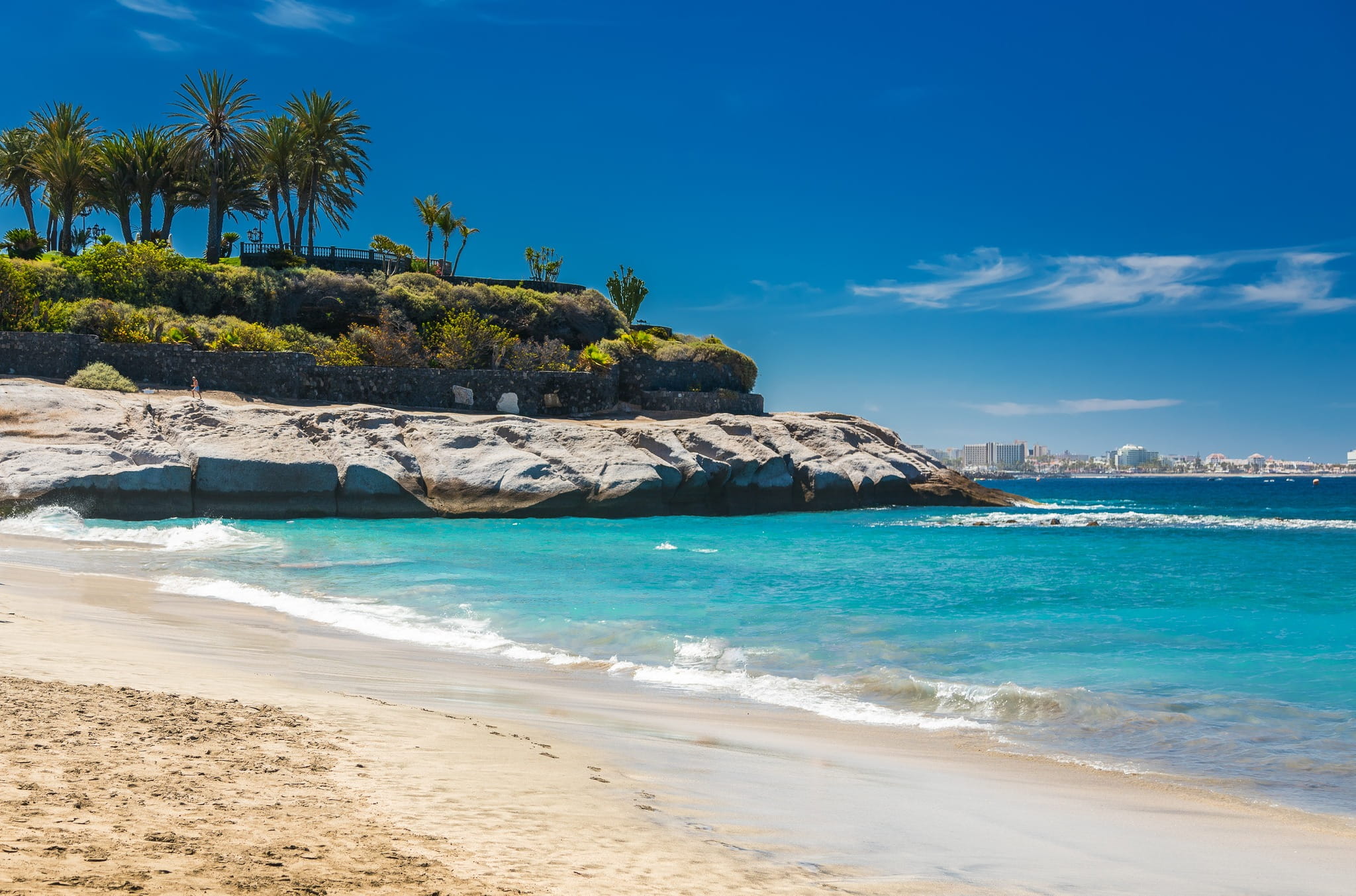
Playa del Duque
The nicest beach in Costa Adeje, full stop. Fine golden sand, calm water, and a relaxed feel despite the five-star hotels behind it. Gets busy, but it’s well managed. Worth it.
Playa Fañabé
Right next to El Duque and slightly more lively. Good for families. You’ll find sunbeds, water sports, and a promenade lined with cafés. Not as polished as Duque, but solid.
Playa de Torviscas
Connects to Fañabé and is a bit more local in feel. Fine for a swim, nothing special to look at, but it does the job.
Playa de la Enramada
Quieter than its neighbours and often overlooked. Small, calm, and good for snorkelling around the rocks at the edges.
Playa de Ajabo
A small, rocky black sand beach tucked below Costa Adeje. You have to walk down a path to reach it, which puts most people off. That’s exactly why it’s worth going.
Playa Diego Hernández
Also called Hippie Beach. Wild, sandy, and not easy to reach; you’ll either hike along the coast or come in from the golf course side. No facilities, no crowds. The kind of beach you feel like you’ve earned. It’s also one of the most established nudist spots on the island, with a reputation that goes back decades.
La Caleta
A small fishing village beach. Nothing fancy, but the seafood restaurants right on the water are genuinely good. Locals eat here. That tells you something.
Playa Las Vistas
One of the best beaches in Los Cristianos. Long, wide, golden sand, calm water. Very popular but well maintained. Good for families.
Playa de Los Cristianos
Right in the town centre. Busy, lively, and surrounded by bars and restaurants. Not the most peaceful spot, but it’s fun and easy.
Playa El Camisón
Sits between Las Américas and Los Cristianos. Quieter than both, which is a bonus. Clean, calm, and a bit more relaxed.
Playa de Las Américas
The main beach of the resort. Lively, loud, and full of sunbeds. If that’s your thing, great. If not, walk ten minutes to El Camisón.
Playa de la Tejita
One of the most naturally beautiful beaches on the island. Long, wide, reddish-brown sand with Montaña Roja rising at one end. Windy, often very windy, but worth it. Popular with kitesurfers and nudists alike — the naturist section sits towards the Montaña Roja end and is well established. No sunbed rentals, no fuss.
El Médano
The longest beach in Tenerife and a proper windsurfing and kitesurfing hub. The town behind it is relaxed and local. Good restaurants, good vibe. Not ideal for a quiet sunbathe, but great for everything else.
Playa Montaña Pelada
A short walk from El Médano, this wild and quiet stretch is popular with naturists. No facilities at all, but the scenery is lovely and it rarely gets crowded. One of those places that feels like a proper find.
Playa San Juan
A small, calm beach in a fishing village on the southwest coast. Quiet, local, and easy to like. The fish restaurants here are some of the best on the island.
Playa Abama
Tiny, private-feeling, and beautiful. It sits below the Abama hotel and is technically accessible to the public, but you’ll need to walk down a steep path. Worth the effort.
Playa de Los Morteros
A small, rocky cove near Diego Hernández. Not really a swimming beach, but dramatic and quiet. Part of the coastal walk between La Caleta and Diego Hernández.
Playa del Callao
Close to Las Américas and Los Cristianos, which makes it one of the more accessible nudist options in the south. Small and a bit rough around the edges, but it works if you want something low key and close to the main resorts.
Playa El Puertito (de Adeje)
A small black sand beach in a tiny fishing village that’s somehow managed to stay almost completely untouched by tourism. No sunbeds, no beach bars, just a calm bay, a handful of white houses, and one local restaurant. The real draw is the water; sea turtles live in this bay year round, and if you bring a snorkel mask you’ve got a decent chance of swimming alongside them. Check the tide before you go though, because at high tide the beach practically disappears. Worth every bit of the drive.
West Coast Beaches
The west coast is often skipped entirely, which is a shame. It’s quieter, less developed, and has some genuinely interesting spots. The drive down from the north through the Teno mountains is one of the best on the island, and if you combine it with a few beach stops you’ve got a proper day out.
Playa de la Arena
Black volcanic sand, calm water, and a Blue Flag to its name. One of the best beaches on the west coast. The contrast of the dark sand against the blue sea is something you don’t forget quickly.
Playa de Los Gigantes
Also called Playa de los Guíos. Small, black sand, and completely overshadowed (literally) by the 600 metre cliffs above it. You don’t come here for the beach, you come for the view. It’s one of the most dramatic spots on the island.
Playa de Puerto de Santiago
A small, calm beach next to Los Gigantes. Less dramatic but more practical. Good for a swim, easy to park nearby, and a decent spot for a relaxed afternoon.
Playa de Alcalá
A quiet little beach in a small village. Black sand, calm water, and a handful of good local restaurants. Not on many tourist itineraries, which is exactly why it’s worth a visit.
Playa El Bollullo (West)
Not to be confused with the north coast Bollullo. A small, rocky cove near Alcalá. Quiet and a bit rough around the edges, but that’s part of the charm.
Playa de Los Silos
Up in the northwest corner of the island. Small, black sand, and very local. The village itself is lovely. If you’re driving around the north coast, stop here.
Playa de Buenavista del Norte
At the very tip of the northwest. Quiet, windy, and a bit rough for swimming, but the scenery around it is worth the drive. The town of Buenavista is one of the most traditional on the island and worth a wander.
El Caletón (Garachico)
Not a beach in the traditional sense, but a series of natural volcanic rock pools right in the town of Garachico. You swim in the pools, not the sea. It’s free, it’s fun, and the town itself is one of the most charming on the island; it was largely destroyed by a volcanic eruption in 1706 and rebuilt around the lava flows, which gives it a completely unique character.

North Tenerife Beaches
The north is wilder, wetter, and less visited by tourists. The beaches here are mostly black sand, often rough, and not always safe for swimming. But they’re some of the most dramatic on the island, and the Anaga peninsula in particular is a world apart from the resort south.
Playa de Las Teresitas
The big one. A long arc of golden Saharan sand just outside Santa Cruz. Calm water thanks to a breakwater, palm trees, good facilities. It’s the most popular beach in the north and deservedly so. Go on a weekday if you can.
Playa de San Andrés
Right next to Teresitas. Smaller, less visited, and a bit more local. Worth a look if you’re already there, and the village has a couple of good fish restaurants.
Playa Jardín
In Puerto de la Cruz, designed by the artist César Manrique. Black sand, volcanic rock formations, and proper gardens behind it. It’s genuinely lovely and often underrated. One of the few beaches in the north that feels properly looked after.
Playa de San Telmo
Also in Puerto de la Cruz. Small, rocky, and not really for swimming, but there are natural pools nearby and it’s a nice spot to sit and watch the waves.
Playa El Bollullo
One of the best natural beaches in the north. Black sand, dramatic cliffs on either side, and a small beach bar at the bottom. You have to walk down a long path to reach it, which keeps the crowds manageable. The waves can be strong, so check the flag before you swim.
Playa de Los Patos
Next to Bollullo and often closed due to the condition of the access path. Worth checking if it’s open when you visit. Similar feel to Bollullo but smaller and even quieter. Also known as a naturist-friendly spot, popular with locals who know the area well.
Playa del Socorro
A black sand beach popular with surfers. Rough water, strong currents, not for casual swimming. But if you want to watch surfers or just sit somewhere dramatic, it’s a good shout.
Playa de La Arena (Tacoronte)
A small beach near Tacoronte with natural rock pools. Local, quiet, and a bit off the beaten track. Good for snorkelling when the sea is calm.
Mesa del Mar
A small coastal spot near Tacoronte with rock pools and a calm, local feel. Not a sandy beach, but a nice place to swim if you’re in the area. There’s a small promenade and a couple of places to eat nearby.
Playa de Almáciga
In the Anaga mountains area. Black sand, wild, and not easy to reach. The road down is narrow and the beach is rough. But the scenery around it is extraordinary.
Playa de Roques de las Bodegas
Near Almáciga, and slightly easier to access. Black sand, big waves, and a small breakwater that gives you a great view of the coastline. One of those places that feels genuinely off the tourist trail.
Playa de las Gaviotas
Close to Las Teresitas but with black volcanic sand and a very different feel. Sheltered by cliffs, which helps with the wind. One of the most well-known nudist beaches in the north, popular with locals and accepted without any fuss.
Playa de Benijo
The one everyone who makes it to Anaga talks about. Black sand, dramatic rock formations rising out of the sea, and waves that crash in hard. Not safe for swimming most of the time, but one of the most visually striking beaches on the island. There’s a restaurant at the top with a view that’s worth the drive alone. Anaga Rural Park surrounds it, and if you’re up there, a walk in the forest is well worth adding to the day.
Playa de Antequera
The most remote beach in Tenerife. You can only reach it by boat or by a three-hour hike through Anaga. No facilities, no lifeguard, no phone signal in places. The waves are powerful and swimming is risky. But if you make the hike, it’s one of those experiences that stays with you. Go prepared, tell someone where you’re going, and don’t underestimate the return journey.
Playa del Castillo (El Sauzal)
A small black sand beach near El Sauzal. Quiet, local, and easy to miss. Worth a stop if you’re driving along the north coast, and the cliffs above it give a good view of the coastline.
Nudist Beaches in Tenerife
Nudism is perfectly legal across Spain, and Tenerife has several spots where it’s well established and genuinely accepted. You don’t need to go looking for a designated nudist beach as such — most of the wilder, more remote beaches are clothing-optional by default. That said, here are the ones where it’s most common and where you’ll feel least out of place either way.
Playa de la Tejita
The most popular nudist beach in the south, and the most accessible. It’s big enough that the naturist section, towards the Montaña Roja end, feels natural and separate from the rest. Windy, wild, and no one bothers anyone. If you’re only going to visit one nudist beach in Tenerife, this is the one.
Playa Diego Hernández
Also known as Hippie Beach, and the nudist reputation goes back decades. It’s remote enough that it self-selects for people who don’t mind a bit of a walk and a relaxed attitude. No facilities, no judgement, and a genuinely beautiful stretch of sand.
Playa Montaña Pelada
Near El Médano, a short walk from town. Wild, quiet, and popular with naturists. No facilities at all, but the scenery around it is lovely and it rarely gets crowded. One of those places that feels like a proper find.
Playa del Callao
Close to Las Américas and Los Cristianos, which makes it one of the more accessible nudist options in the south. Small and a bit rough around the edges, but it works if you want something low-key and close to the main resorts.
Playa de las Gaviotas
In the north, close to Las Teresitas but with black volcanic sand and a very different feel. Sheltered by cliffs, which helps with the wind. Popular with nudists and local families alike, depending on the day. One of the most well-known naturist spots in the north.
Playa de Los Patos
On the north coast near La Orotava. Remote, rugged, and naturist-friendly. The access stairs were closed for years but have since been repaired. Strong currents, so swimming here is for confident swimmers only.
A Few Worth Skipping
Not every beach deserves your time. Playa de Las Américas is fine if you’re staying right there, but it’s loud and crowded and there are better options nearby. Some of the smaller rocky coves in the north look good on a map but are genuinely dangerous and have no access path worth using. And a few beaches near industrial areas in the east, around Santa Cruz port, are not worth the detour.
If you’re short on time, skip anything that requires a long drive for a mediocre result. The island rewards the people who look a little further, but not every hidden beach is hidden for a good reason.
Practical Tips Before You Go
A few things worth knowing before you head out:
- Hire a car. You won’t regret it. The best beaches are spread across the island and public transport to many of them is limited or non existent.
- Check the flag system. Green is safe, yellow is caution, red means stay out. This applies everywhere, but especially on the north coast where conditions can change quickly.
- Go early or go late. The main resort beaches fill up fast in summer. Before 10am or after 4pm, you’ll have a much better time.
- Bring cash. Sunbed rentals and small beach bars often don’t take cards. Expect to pay around €8 to €12 for a sunbed and parasol on the main beaches.
- Pack a snorkel. Several beaches, El Puertito, La Enramada, Abama, have excellent snorkelling right off the shore. You don’t need to book a boat trip.
- Respect the nudist sections. On beaches like Tejita and Diego Hernández, the naturist areas are well established. Don’t stare, don’t photograph, just get on with your day.
FAQs About Beaches in Tenerife
Which beach in Tenerife is best for families?
Las Teresitas in the north or Las Vistas in Los Cristianos. Both have calm water, good facilities, and lifeguards. Teresitas is more scenic; Las Vistas is more convenient if you’re staying in the south.
Are there any sandy beaches in the north of Tenerife?
Las Teresitas is the main one, and it’s golden sand imported from the Sahara. Most other north coast beaches are black volcanic sand, which is actually quite beautiful once you get used to it.
Which beaches in Tenerife are good for surfing?
El Médano and La Tejita in the south for kitesurfing and windsurfing. Playa del Socorro and El Bollullo in the north for wave surfing. Benijo is also popular with experienced surfers.
Is it safe to swim at all beaches in Tenerife?
No. Always check the flag system: green means safe, yellow means caution, red means stay out. Several north coast beaches have strong currents and are not safe for swimming even on calm days.
What colour is the sand in Tenerife?
It depends where you go. The south has mostly golden or pale sand, much of it imported. The north and west have natural black volcanic sand. La Tejita has a distinctive reddish-brown colour thanks to Montaña Roja nearby.
When is the best time to visit Tenerife beaches?
Honestly, any time of year works. The south is warm and sunny year-round. The north is cooler and cloudier in winter but still mild. Summer is the busiest period, so if you want quieter beaches, spring or autumn is the sweet spot.
Are there nudist beaches in Tenerife?
Yes, quite a few. La Tejita and Diego Hernández are the most popular in the south. Playa de las Gaviotas is the go-to in the north. Nudism is legal across Spain, so on most wild or remote beaches it’s accepted without any fuss.
Do you have to pay for sunbeds on Tenerife beaches?
On most main beaches, yes. Expect to pay around €8 to €12 for a sunbed and parasol. On wilder beaches like Benijo, Antequera, or Diego Hernández, there are no sunbeds at all. Bring a mat.
Can you drive to all the beaches in Tenerife?
Most of them, yes, though some require a short walk from the nearest car park. A handful, Antequera being the main one, are only reachable on foot or by boat. For the Anaga beaches in particular, the roads are narrow and winding, so take your time.
One Last Thing
Tenerife has more coastline than most people realise, and a lot of it is genuinely worth seeing. You don’t have to stick to the resort beaches, though there’s nothing wrong with them either. Rent a car for a day, drive up to Anaga, stop at Benijo, eat fish in San Juan on the way back. That’s a pretty good day by anyone’s measure.
The island rewards the people who look a little further. Not much further. Just a bit.