


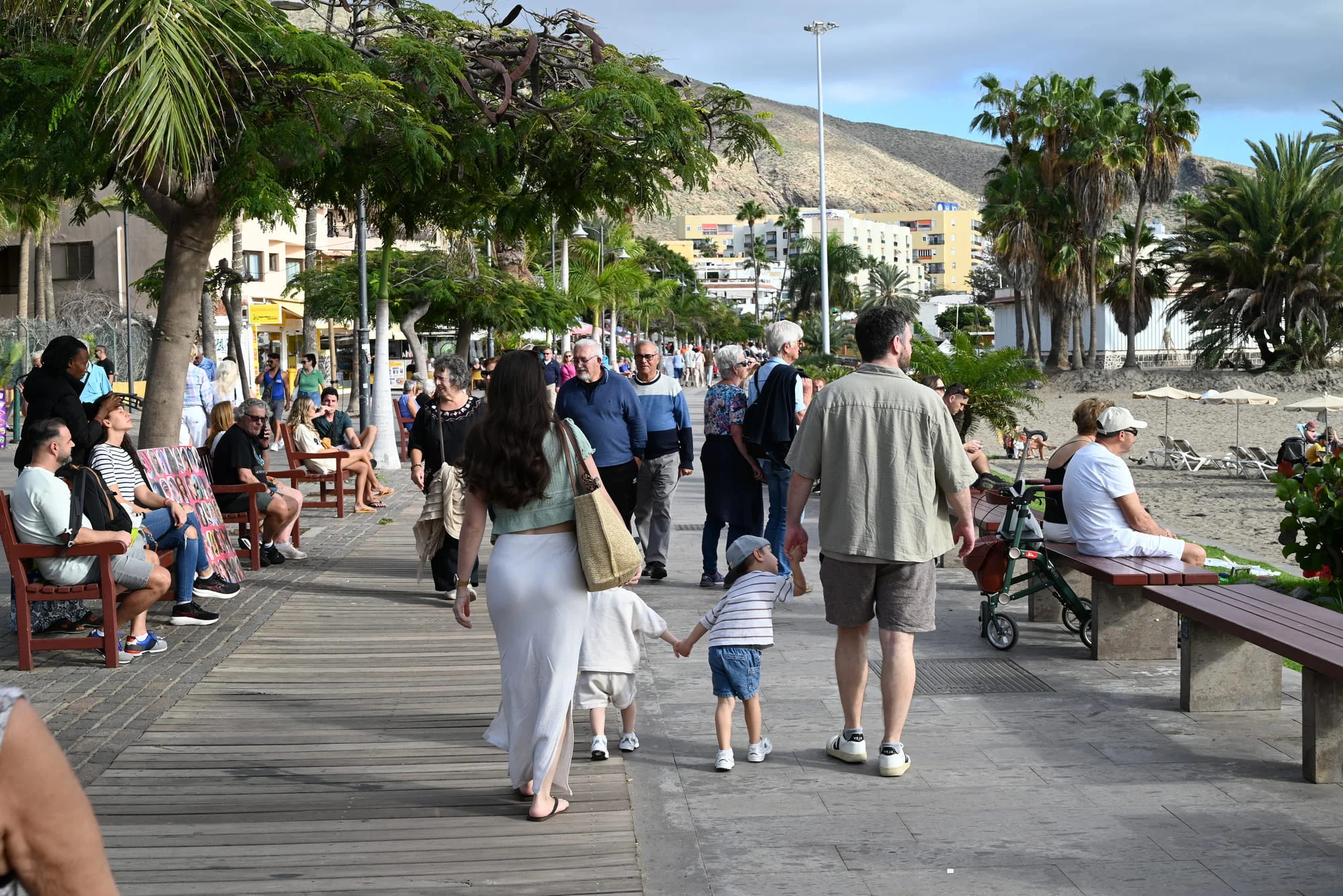
Tenerife Tourism Through the Decades: A Comprehensive Case Study (1960–2026)
Last updated: May 2026 — Tenerife, the largest of Spain's Canary Islands, has grown from a quiet volcanic island known to a handful of European adventurers into one of the world's busiest year-round sun-and-sea destinations. This case study traces that transformation decade by decade, with data, charts, and analysis drawn from authoritative sources.
Key Metrics at a Glance (2024–2025)
Visitor Arrivals 1960–2025
From fewer than 50,000 visitors in 1960 to over 6 million by 2024, Tenerife's growth has been near-continuous, interrupted only by external shocks such as the 2001 US attacks, the 2008 financial crisis, and the COVID-19 pandemic.
Tenerife: Visitor Arrivals by Decade Milestone (thousands)
Sources: ISTAC, Cabildo de Tenerife, INE (Spain). Red bar = record high 2024. Pink bar = COVID-19 collapse 2020.
Top Source Markets (2024)
The United Kingdom remains Tenerife's single largest source market, accounting for roughly 30% of all arrivals. Germany, the Nordic countries, and Spain's mainland together form the next tier.
Tenerife Tourist Nationalities 2024 (% of total arrivals)
Decade-by-Decade Story
1960s: The Birth of Mass Tourism
Spain's Stabilisation Plan of 1959 and subsequent opening to foreign investment triggered the first wave. Puerto de la Cruz and Los Cristianos received the first charter flights from the UK and Germany via Tenerife North Airport (Los Rodeos). Hotels were small, family-run, and often converted farmhouses. Arrivals grew from ~50,000 (1960) to ~800,000 (1969) — a 1,500% surge in one decade.
- First package-holiday tours sold by British and German operators c.1963
- Puerto de la Cruz established as the first formal resort zone
- Banana and tomato farming began giving way to hotel construction
1970s: Infrastructure Build-Out
The opening of Tenerife South Airport (Reina Sofía) in 1978 was the decade's defining infrastructure event, unlocking the sunny south of the island for large-scale resort development. Playa de las Américas was built almost from scratch on scrubland. The 1977 Tenerife airport disaster — the deadliest in aviation history (583 fatalities) — briefly suppressed arrivals but had no lasting impact on growth. By 1979, annual arrivals had passed 2 million.
- Playa de las Américas resort built 1974–1980
- Los Cristianos harbour expanded for inter-island ferries
- First large international hotel chains establish presence
1980s: The Charter Flight Boom
UK deregulation of air travel and the growth of low-cost charter operators (Monarch, Britannia, Condor) made Tenerife the default winter-sun destination for millions of Northern Europeans. Hotel bed capacity tripled during this decade. The island earned the nickname "Costa Canaria" as concrete hotel blocks spread along the southern coast. Arrivals reached ~4 million by 1989. The Tourism Modernisation Act 1984 attempted — with limited success — to regulate construction quality.
1990s: Peak Package Holiday Era
The 1990s were the golden age of the all-inclusive resort. Thomas Cook, TUI, and First Choice dominated distribution. Arrivals peaked at ~5.3 million by 1997. Water parks, golf courses, and themed attractions diversified the offer. However, over-reliance on tour operators left the island vulnerable to surges and slumps driven by competitor destinations (Turkey, Egypt, Cuba) rather than Tenerife's own appeal.
- All-inclusive model becomes dominant hotel format
- Canary Islands granted special EU status — VAT-free shopping maintained
- First concerns raised about water scarcity and coastal overdevelopment
2000s: Shocks & Resilience
The 9/11 attacks (2001) and the rise of cheap flights to rivals (Egypt, Tunisia, Turkey) caused a brief dip to ~4.7M arrivals. The rise of Ryanair and easyJet routes into Tenerife South partially compensated for the decline of charter packages. The 2008 financial crisis hit harder, with arrivals falling ~8% by 2009. However Tenerife's 365-day sunshine and established brand meant recovery was faster than most Mediterranean rivals.
2010s: Record-Breaking Growth
Political instability in North Africa (Arab Spring 2010–2012) redirected millions of sun-seekers from Egypt and Tunisia to the Canaries. Tenerife benefited enormously. Arrivals surged from 5.1M (2012) to a pre-COVID record of 6.05M in 2017. The decade also saw the explosion of Airbnb and holiday rental platforms, adding tens of thousands of unlicensed beds and triggering the first serious local housing affordability protests. Siam Park won TripAdvisor's World's Best Water Park award multiple years running.
- 2017: Record 6.05M arrivals; €6.3B tourism revenue
- Airbnb listings in Tenerife exceed 20,000 by 2019
- First "Tourist Go Home" graffiti appears in Santa Cruz
2020s: Pandemic, Recovery & Protest
COVID-19 reduced 2020 arrivals to just ~1.1M (−82% YoY) — the worst single-year collapse in the island's tourism history. Recovery was swift: 4.1M in 2021, 5.5M in 2022, 6.1M in 2023, and a new record of 6.4M in 2024. However, record visitor numbers coincided with a housing crisis that pushed average rents up 40% in five years. In April 2024, an estimated 100,000 people marched across the Canary Islands under the banner "Canarias Tiene un Límite". A second major protest followed in November 2024. In 2025, the Canarian government announced a new Sustainable Tourism Strategy capping new hotel bed licences in saturated zones.
Key Disruptions & Recovery Timeline
1977 — Tenerife Airport Disaster
Collision of two Boeing 747s on Los Rodeos runway killed 583 people. Arrivals dipped briefly but recovered within 18 months. Led to major international aviation safety reforms.
2001 — 9/11 & Competitor Destinations
US attacks caused ~5% drop in European air travel. Simultaneous rise of cheap Turkey/Egypt packages cut Tenerife market share. Recovery took ~3 years.
2008–2010 — Global Financial Crisis
Arrivals fell from 5.8M (2007) to 5.1M (2010). Budget-airline routes cushioned the blow. Revenue per visitor held up as higher-spending Germans replaced price-sensitive UK visitors.
2011–2013 — Arab Spring Windfall
Political instability in Egypt and Tunisia redirected ~1M Northern European visitors to Tenerife. Arrivals grew 14% in two years, the fastest peacetime acceleration since the 1970s.
2019 — Thomas Cook Collapse
Thomas Cook collapsed in September 2019, directly affecting ~200,000 tourists in resort, costing Tenerife hoteliers an estimated €120M in bad debt.
2020 — COVID-19 Pandemic
Borders closed March 2020. Arrivals collapsed 82% to 1.1M. Hospitality sector shed 35,000 jobs. Canarian government provided €1.4B in sector support.
2024–2026 — Overtourism Protests & Policy Response
Record arrivals coincide with housing crisis. Mass protests April and November 2024. New sustainable tourism strategy announced 2025. Moratorium on new hotel licences in Los Cristianos and Playa de las Américas.
Canary Islands: Visitor Share by Island (2024)
The Canary Islands received approximately 16.8 million visitors in 2024. Tenerife's 6.4M represents roughly 38% of all Canarian arrivals, ahead of Gran Canaria (~29%) and Lanzarote (~16%).
Canary Islands: Visitor Share by Island (2024)
The Overtourism Debate: 2024–2026
⚠ Live Issue: Canarias Tiene un Límite
- April 2024: ~100,000 marchers across 7 islands demand tourist cap and housing protections
- November 2024: Second wave of protests; Tenerife sees largest local demonstrations since 1980s
- February 2025: Canarian government announces moratorium on new hotel bed licences in Los Cristianos, Playa de las Américas, and Costa Adeje
- April 2025: New eco-tax for non-resident visitors proposed (€3–6/night); legislation pending as of May 2026
- 2025–2026: Holiday rental platforms required to register all listings; ~8,000 illegal Airbnb properties face removal orders
🏘 Housing Crisis
Average Tenerife rent rose 42% between 2019 and 2024. In tourist zones, long-term rentals fell 60% as landlords switched to short-term platforms. Median rent now absorbs 55% of an average local wage.
💧 Water & Resources
Each tourist uses an estimated 400 litres/day vs. 180 litres for locals. Desalination plants supply 70% of the island's water. Climate projections suggest 15–20% less rainfall by 2050.
🚀 Economic Dependency
Tourism represents 35% of GDP and underpins 90,000+ jobs. COVID demonstrated the existential risk of a monoculture economy. Diversification into tech, film, and renewables is progressing slowly.
🌿 Environmental Pressure
Teide National Park receives ~4M visitors annually. Traffic congestion led to a mandatory reservation system in 2023. Marine pollution from leisure boats threatens Blue Flag coastlines.
Economic Contribution Over Time
Tourism's share of Tenerife's GDP has grown from ~8% in 1970 to around 35% today. The table below tracks estimated revenue alongside visitor numbers:
| Year | Arrivals (M) | Revenue (€B est.) | % of GDP |
|---|---|---|---|
| 1980 | 2.1 | 0.3 | ~12% |
| 1990 | 4.1 | 1.1 | ~20% |
| 2000 | 5.0 | 2.8 | ~26% |
| 2010 | 5.1 | 4.2 | ~28% |
| 2017 | 6.05 | 6.3 | ~32% |
| 2020 | 1.1 | 1.0 | ~10% |
| 2022 | 5.5 | 7.1 | ~31% |
| 2024 | 6.4 | 9.2 | ~35% |
Future Outlook
Tenerife faces a classic overtourism paradox: its success is generating the pressures that could undermine the very quality that made it successful. The island's tourism authority (Turismo de Tenerife) is pursuing a "value over volume" strategy. Key initiatives include:
- Sustainable Tourism Strategy 2025–2030: Caps on new accommodation licences in saturated coastal zones
- Eco-tourist tax: Proposed €3–6/night levy to fund environmental restoration
- Teide cable car modernisation: Planned upgrade to increase capacity and reduce carbon footprint
- Digital nomad attraction: Co-working infrastructure targeting remote workers who generate income without peak-season crowd pressure
- Circular economy in hospitality: Mandatory food waste composting and renewable energy targets for hotels above 100 rooms by 2027
Sources & Further Reading
- ISTAC (Instituto Canario de Estadística) — Official Canarian tourism statistics
- INE (Instituto Nacional de Estadística) — Spain national tourism data
- Cabildo de Tenerife — Island government economic reports
- Turismo de Tenerife — Official tourism promotion body
- UNWTO — World Tourism Organisation global benchmarking
- Exceltur — Spanish tourism sector alliance data and reports
- Eurostat — EU tourism accommodation statistics
- The Guardian — Tenerife coverage — Overtourism protest reporting 2024–2025
- eldiario.es — Spanish investigative reporting on Canarian housing crisis
Data notes: Visitor arrival figures sourced from ISTAC and INE. Revenue and GDP share figures are estimates based on published Exceltur and Cabildo de Tenerife reports and should be treated as indicative. Last updated May 2026.


