



After you’ve done all your research and spent time scrolling through social media for ideas to plan your perfect trip to Tenerife, you begin to realise that while searching for the best things to do in Tenerife returns quite a lot of repetition.
A lot of things get pushed on tourists but there is a different side of the island that many visitors never get to experience.
The Cable Car Up Teide: Worth It, But Not How You Think
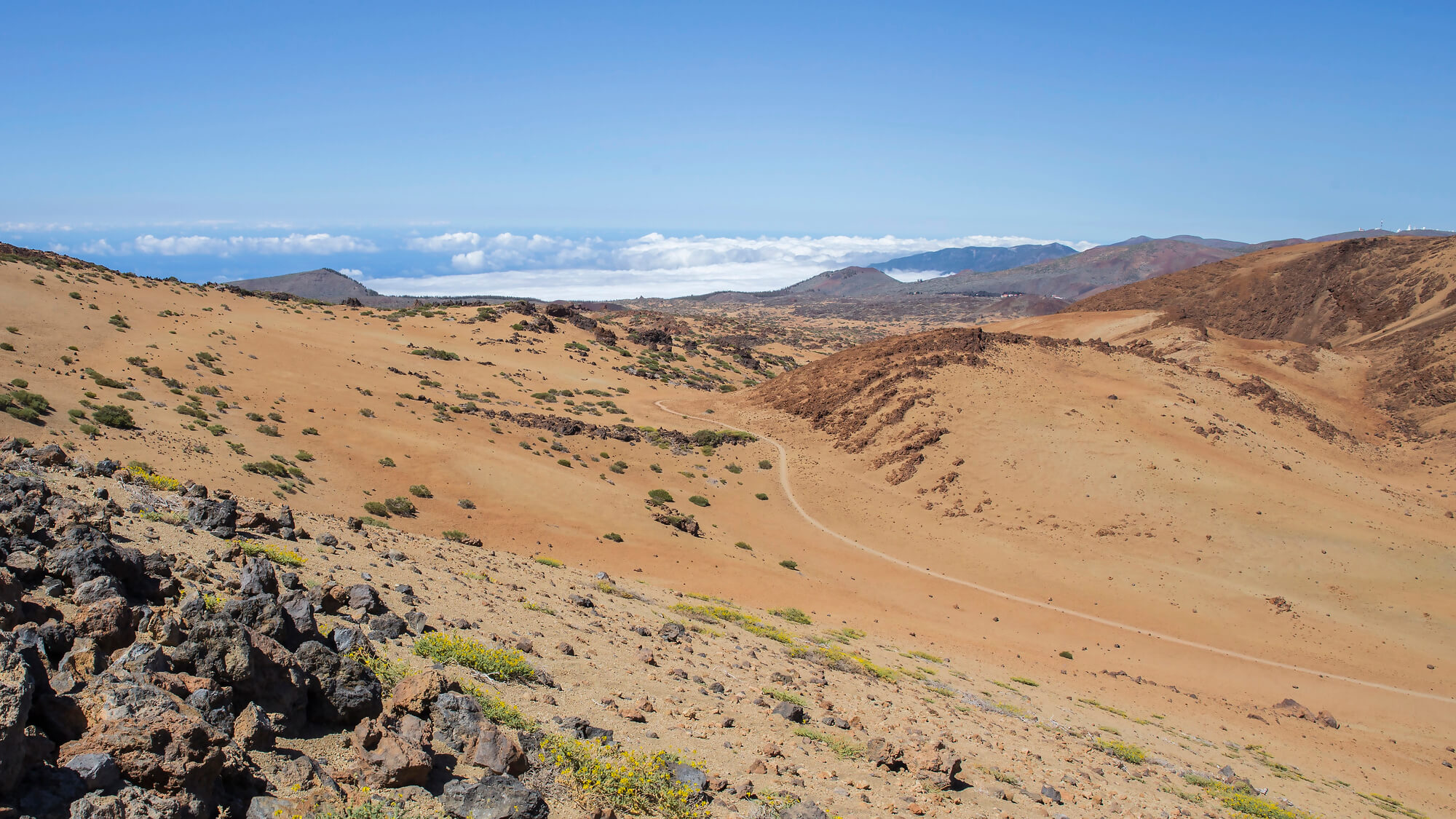
Everyone wants to go up Teide. Of course they do. It’s the highest peak in Spain, it’s on every Tenerife travel list ever written, and from certain angles it does look like something from another world. The rock up there is rust-coloured and strange, and when the clouds sit below you it’s genuinely hard to believe you’re still on Earth.
But here’s what the travel sites don’t tell you: if you take the cable car, you can’t go to the summit. Not without a separate permit, booked well in advance through the Teide National Park reservation system, and those slots go fast. Without the permit, you ride up, you stand at a viewpoint about 200 metres below the top, you take a photo, and you ride back down.
The better experience, if you’ve got decent boots and a few hours, is to hike. The Montaña Blanca route starts lower down and takes you through the lunar terrain at your own pace, with no crowds around you. You can smell the sulphur before you see the summit, and the view at the top is stunning which is worth the hike if you are able to do it.
What Playa de las Américas Is Actually Good For
I’ll say something slightly controversial here: Playa de las Américas isn’t without merit. It just needs to know its place.
If you want a beach that’s a short walk from your hotel, a cold beer in the sun, and a poolside afternoon with no decisions to make, it does all of that reasonably well. Playa de Troya is dark volcanic sand which feels strange if you’re used to other types of beaches, but it’s clean, and the sea is warm in a way that actually surprises you the first time you walk in.
The problem is when people treat it as a destination rather than a base. The strip is loud and bright in a very deliberate, very calculated way. The restaurants on the seafront are priced for tourists and cooked accordingly. You can eat well in the south of Tenerife, but not there. Not on that strip.
If you’re staying in the south and you want to eat properly, just take a drive twenty minutes up the road to the fishing village of Los Abrigos where you’ll find several nice seafood restaurants along the harbour. Try the local bream or vieja if it’s available which is white and soft, grilled simply with salt and a squeeze of lemon and is worth every kilometre of the drive.
The Loro Parque Question (Honestly, It’s Complicated)
Loro Parque in Puerto de la Cruz gets a lot of attention both good and bad, and although it’s a proper zoo and well kept, the orca shows have become genuinely difficult to justify. A growing number of visitors are choosing to skip the place altogether due to this. If you’re going with children who just want to see animals and have a long day out then it does that job well enough, but if you’re going looking for something that feels ethical and thoughtful, then you might want to skip it.
The animal welfare conversation around marine parks is ongoing, and Born Free has been tracking it for years if you want a clear eyed take before you decide.
Garachico: The Town That Should Be Far More Famous
I keep recommending Garachico to people and they keep coming back and saying “why didn’t we go there sooner.” So let me try again.
In 1706 a volcanic eruption came down the hillside which buried most of the town under lava and it destroyed everything in its path as well as the harbour. At the time, the harbour was the most important port in the Canary Islands and this event reshaped the coastline completely and left a small, quiet town in the northwest that never fully recovered economically. The streets are cobbled and uneven with older looking buildings old that faded slightly in the nicest way. There’s a 16th century castle near the waterfront, and the natural rock pools carved out by that same lava are free to swim in and genuinely unlike anything else on the island.
If you go there, you’ll find several small restaurants in the square that serve traditional food that are very kind to your pocket and you’ll experience a part of the island you never knew existed.
La Laguna: The City Most Visitors Miss Entirely
San Cristóbal de La Laguna is somewhere that needs exploration for its history and heritage and I’d guess fewer than one in ten tourists visiting Tenerife have ever set foot there which is such a shame.
It was the first planned city in the Canary Islands and the layout of the old town still follows that original structure. The buildings are tall and painted in deep terracottas and yellows, with its narrow streets and quaint shops, the whole place has the slightly lived-in energy of a university town, which it is.
There are good coffee shops and proper bookshops, and not forgetting the Mercado Municipal, where locals do their actual food shopping rather than buying tourist souvenirs. On weekends it’s full of life and colour, and the smell of fresh bread and fish. You won’t find that in the south.
Actually, I should mention this before I move on: if you’re based in the south and you think La Laguna is too far for a day trip, it isn’t. The TF-1 motorway gets you there in under an hour from most resorts, and parking near the old town is straightforward on weekends. There’s no good reason to skip it.
Anaga: The Part of Tenerife That Feels Like a Different Island
The Anaga Rural Park is in the northeast corner of Tenerife and most visitors never go near it. It’s covered in ancient laurisilva forest, the kind of subtropical woodland that’s been there since before the last ice age, and when the mist comes through the trees in the morning it smells damp and green and old in a way that’s hard to describe.
The villages tucked into the ridges and ravines of Anaga are some of the oldest settlements on the island. Some of them you can only reach on foot. The hiking trails are varied, ranging from gentle ridge walks with views down to the coast on both sides, to steeper descents into little-visited coves where the water is clear and cold and the beach is usually empty.
For more detailed route information and advice from people who actually walk these trails regularly, have a look at this hiking guide article that gives comprehensive details.
Is It Worth Renting a Car in Tenerife?
Yes. Without question. The bus network covers the main tourist areas well enough, but to reach Garachico, Anaga, Masca, or any of the smaller villages in the north and northwest, you need your own transport. Roads in places like Anaga and around Teno can be narrow and winding, but they’re manageable. Just drive slowly, pull over when someone comes the other way, and don’t attempt them in the dark if you don’t know them.
What Time of Year Actually Makes Sense for Tenerife
The south is warm year-round. That’s genuinely true, not just a line from a brochure. But “warm” in January is about 20 degrees with a breeze, which is lovely for walking and not quite beach weather unless you’re very determined.
Spring, March through May, is the best time if you want to do more than lie on a beach. The north is lush and green, the hiking trails are in good condition, the island is quieter, and you’re not competing with half of Europe for a sun lounger. Summer is very busy in the south and very hot. Late autumn can be unpredictable in the north but fine in the south.
The Honest Version of Siam Park
Siam Park is genuinely good. It’s been voted one of the best water parks in the world multiple times and the rides are worth it if you’re going with children or if you just want a properly good water park day. But go in peak summer without planning and you’ll spend more time queuing than sliding. Book tickets online, get there when it opens, and you’ll have a good time. Show up at midday in August without a booking and you’ll have a long, sweaty, expensive queue.
The thing about Tenerife is that it’s generous with second chances. You can have a perfectly forgettable holiday there, the kind where you come home and say “yeah, it was alright,” and you can also have a really good one on the exact same island in the exact same week. The difference is mostly just knowing where to point yourself.
If you’ve already written it off because of one bad trip to the south, or because someone told you it was just for stag dos and all-inclusives, I’d go back. The version of Tenerife that locals actually live in and love is still there. It’s just not on the strip.


