



Most of what you’ve heard about Tenerife is either completely wrong or only true for about a square mile of the island. Before you write it off, or book the wrong part of it, read this.
“It’s Just a Package Holiday Island”
This one does the most damage. It’s the reason smart travellers skip Tenerife entirely and fly somewhere with worse weather, worse food, and a better Instagram reputation.
Here’s what that assumption is based on: Playa de las Américas. One resort strip in the south of the island that was built fast in the 1980s for volume tourism. Loud, brash, architecturally grim, full of bars advertising “the best Full English outside Benidorm.” It exists. It’s real. And if that’s your reference point for the whole island, you’ve made a serious geographical error.
Tenerife is 2,000 square kilometres. The north is a completely different world, green and misty and genuinely strange-looking, with old towns that have been there for centuries and restaurants where the menu changes based on what came in that morning. Garachico, in the northwest, was half destroyed by a volcanic eruption in 1706 and rebuilt around the lava flows. You can swim in the natural rock pools the eruption created while looking up at the town that survived. That’s not a package holiday. That’s one of the more quietly extraordinary things in the Atlantic.
The Weather Is Always Perfect
People say this as a selling point and it’s only half the thing they think it is.
The south of the island, yes, it’s reliably warm and dry and sunny for most of the year. The north and the interior, genuinely not. There’s a reason the north is green. It rains. Sometimes for days. The cloud sits low around the Anaga mountains and the Orotava Valley and it doesn’t always lift before you’ve given up waiting and driven back south.
The microclimate situation on Tenerife is one of the most dramatic of any island I’ve been to. You can drive from 28 degrees and full sun to cold fog in about forty minutes. In summer, the south is often 10 degrees hotter than Santa Cruz, the capital, which sits on the northeast coast and gets the trade winds. People turn up in July expecting wall-to-wall heat and spend three days in a light jumper wondering what went wrong.
What this actually means practically: if reliable sun is the point of the trip, book accommodation in the south. If you want to explore the interior and the north, pack something warm and accept that the weather is going to do what it does.
Teide Is Just a Big Mountain, You Don’t Need to Go
I’ve heard this from people who’ve been to Tenerife and didn’t bother going up, and honestly, I think they might have been to a different island.
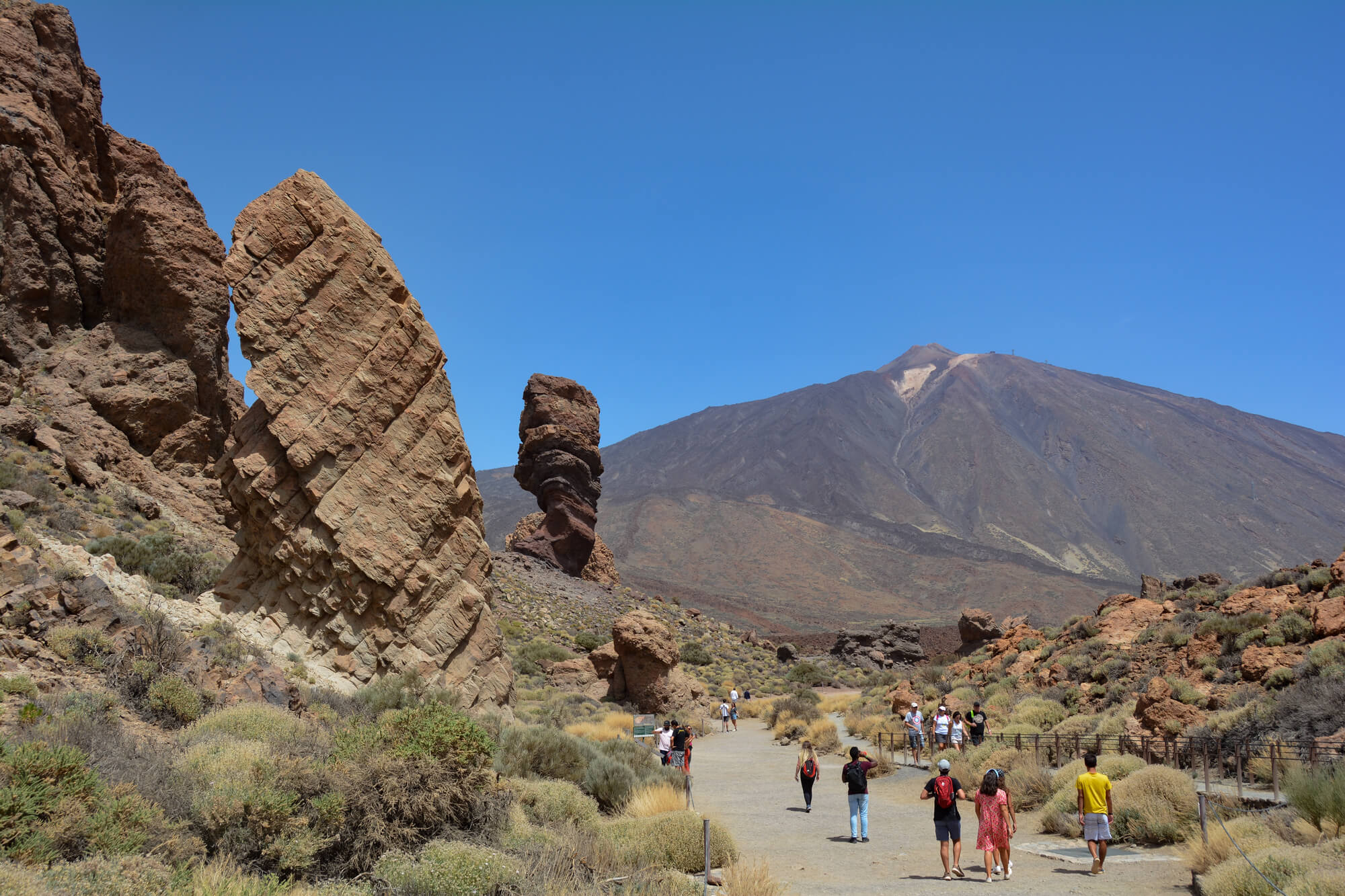
Teide is the highest point in Spain and the third largest volcanic structure on the planet measured from the ocean floor. When you get up above the cloud line and you’re standing on what is essentially the top of Mars, red and silent and not quite real, with a sea of cloud below you and the Atlantic visible beyond it, the word “mountain” doesn’t quite cover it. The smell up there is mineral and faintly sulphurous, the ground crunches slightly underfoot, and the light at sunrise turns the rock the colour of dried blood.
You do need to book the permit to reach the actual summit in advance, which catches people out constantly. The Spanish National Parks booking system opens slots months ahead and they go. If you turn up on the day expecting to just walk up, you’ll get as far as the cable car station and not a metre further. Book early. It’s worth it.
Star Wars Was Filmed Here
Tour guides have been saying this for decades. It’s not true, and I’m not sure it’s ever been true, but that hasn’t slowed anyone down.
Tenerife has a Film Commission that keeps records of every production filmed on the island. Star Wars isn’t on it. Neither is Planet of the Apes, which tends to be the other title that gets added to the myth depending on which guide you’re with. I’ve heard both versions confidently delivered to groups of nodding tourists on the road up to Teide, and both versions are wrong.
The frustrating thing is that the real list doesn’t need any embellishment. Clash of the Titans was filmed here, the 1981 original, with Harry Hamlin and Laurence Olivier and the kind of production that genuinely used the volcanic landscape as an alien world. Fast and Furious 6 used the southern motorways for chase sequences. Jason Bourne filmed here. Rambo V. And Doctor Who has shot in both Teide National Park and Garachico, which makes sense the moment you see either place. A barren volcanic plateau above the clouds and a town half-rebuilt around centuries-old lava flows are exactly the kind of locations a production designer dreams about.
That is, by any measure, a good list. A legitimate, documented, genuinely interesting film history that Tenerife could actually lean into. I don’t fully understand why the Star Wars myth persists when the truth is this easy to find, but it does, and now you can politely correct whoever tells you. Or not so politely, depending on how far into the tour you are by that point.
The Food Is Just Chips and Frozen Paella
I’ll admit there’s a version of Tenerife where this is basically true. If you eat in the resort strip, in the places with laminated menus and photographs of the dishes, you’ll eat badly and expensively and you’ll deserve it.
The actual Canarian food is completely different and most visitors never find it because they’re not looking in the right places.
Papas arrugadas are small wrinkled potatoes boiled in heavily salted water until the skin crystallises. You eat them with mojo, either the red version made with peppers and cumin or the green one made with coriander and garlic. They’re served everywhere, they cost almost nothing, and the green mojo in particular has a sharpness and freshness that I’ve spent years trying to recreate at home and have never quite managed.
Gofio is a toasted grain flour that’s been a Canarian staple for centuries and shows up in soups, desserts, and bread. Ropa vieja is not the Cuban version, it’s a Canarian stew of chickpeas and meat that’s slow and rich and absolutely nothing like what you’d expect from a sunny Atlantic island. The fish, particularly in the north near the ports, is extraordinary. Vieja, a local parrotfish, grilled simply with salt and a wedge of lemon, is one of the better things I’ve eaten anywhere.
Eat where locals eat. If the menu is only in English, leave.
It’s Overrun With Tourists All Year
Parts of it, yes. All of it, no.
The Anaga Rural Park in the northeast is one of the least visited UNESCO Biosphere Reserves in Europe. It’s ancient laurel forest, the kind that covered much of Europe before the last ice age, and on a weekday in January you can walk for three hours and see almost nobody. The villages in the park, places like Taganana, accessible via a road so steep and winding it feels like a genuine act of faith, have restaurants with handwritten menus and prices that belong to a different decade.
The Teno massif in the northwest is similarly quiet. Masca, the famous village in the gorge, does get busy because it’s on every tour itinerary and it’s undeniably beautiful. But walk twenty minutes beyond the main viewpoints and the other walkers disappear almost immediately.
The tourist density is real in specific places. It just doesn’t cover the whole island, and it’s entirely possible to avoid it if you have a car and you’re willing to drive on roads that occasionally make you slightly nervous.
You Have to Stay in a Hotel Resort
The rise of rural accommodation on Tenerife is genuinely under-reported. There are converted farmhouses in the Orotava Valley with views down to the coast and the kind of quiet that makes you realise how loud everywhere else is. Small guesthouses in La Laguna, the old university town in the north that’s a UNESCO World Heritage Site, where you can walk to proper restaurants and bars at night and wake up to church bells and the smell of coffee from the café below.
La Laguna, by the way, is one of the places on this island that other guides barely mention because it doesn’t have a beach. That’s a mistake. The colonial architecture, the tapas bars, the covered market, the general feeling of a city that’s been living its life for centuries without needing your approval, it’s worth at least a day, ideally more.
It’s Cheap If You Go All-Inclusive
All-inclusive sounds like value. Sometimes it is. Often it’s the most expensive way to see an island because what it actually buys you is permission to not leave the hotel, and on an island this varied, not leaving the hotel is a significant waste.
The all-inclusive model means you’ve pre-paid for food and drink that ranges from fine to mediocre, and you’ve psychologically committed to consuming it. The result is that people skip the papas arrugadas in the market, don’t stop at the roadside guachinches selling rough local wine for two euros a glass, and spend their week in a buffet queue. The guachinches, actually, deserve their own mention. They’re informal restaurants, often attached to family vineyards in the north, open only when the wine is ready, unlicensed in the traditional sense, and serving home cooking at prices that feel vaguely illegal. The Tenerife Forum website has some guidance on finding them, though honestly asking a local in the north will get you further.
All-inclusive works if you genuinely want to switch off completely and don’t care about experiencing the island. Just be honest with yourself about which kind of trip you’re actually taking.
It’s Not Worth Going in Winter
This is the myth that baffles me most because it’s precisely backwards.
In December, January, and February, the south of Tenerife is around 20 to 22 degrees and consistently sunny. The beaches are quieter. The roads are quieter. The restaurants have space. The light in winter on the west coast at around four in the afternoon, gold and low and stretching long shadows across the volcanic rock, is one of those things you remember properly. You can also see the Milky Way from the Teide plateau in winter with a clarity that doesn’t happen in summer, when there are too many people and too much dust in the air.
Winter is not a compromise. For a lot of people, it’s the best time to go.
The Beaches Are All the Same
They’re really not. The black sand beaches in the north, like Playa Bollullo near Puerto de la Cruz, feel completely different from the pale imported sand of the southern resort beaches. The black sand holds heat differently, the contrast against the blue water is striking, and there’s usually a beach bar nearby serving cold beer and fresh fish at prices that won’t hurt. Playa de Benijo in the Anaga, which you reach via a winding coastal road, is genuinely dramatic, with the jagged Roques de Anaga rising out of the water offshore and almost no amenities and strong waves that mean most people sit on the rocks rather than swim.
The southern beaches like El Médano are better for wind sports than sunbathing. Las Teresitas near Santa Cruz is a long curve of pale sand imported from the Sahara in the 1970s, backed by palm trees and used mainly by locals at weekends. It looks completely unlike the resort beaches and feels nothing like them either.
They’re the same island. They’re not the same beach.
One Last Thing
Tenerife has a reputation problem that it doesn’t really deserve and it gets judged by its worst parts and dismissed by people who’ve never seen its best parts. That’s actually quite good news for you because the places that get dismissed are often the ones where the prices are still reasonable and the crowds haven’t fully arrived.
Go to Teide. Eat the mojo. Find a guachinche in the north. Drive the Anaga. And ignore everything you thought you knew about the place before you went.


