



Whether you’ve never been and you’re going off what people tell you, or you went once and stayed near the pool, there’s a good chance what you think you know is at least half wrong.
The North Is Cold and Miserable
This one refuses to die. Ask on any travel forum and someone will confidently tell you the north is grey, cold, and not worth your time. Go south, they’ll say. Always south.
I understand where it comes from. The north does get more cloud. It gets more rain in winter. But cold? Miserable? That’s a stretch based on someone’s bad week in November.
The temperature rarely dips below 17°C in Puerto de la Cruz even during the month of February and the cloud that rolls in off the Atlantic is often just that, cloud, and it usually clears by mid-morning. The north is green and lush precisely because it gets some moisture and the reason why it looks the way it does.
The south is sunnier. Fine. But the idea that the north is a cold disappointment has kept a lot of people away from the most interesting part of the island, and that’s a real shame.
It’s Just Britain With Better Weather
There is a version of Tenerife that does look like this this because there are many British residents and visitors who want the comforts of their home country, just like any other nationality globally. Playa de las Américas and other parts of the south have British pubs, full English breakfasts, shops selling British products and they exist because there is a demand for them and they take up a small corner of a fairly large island.
Drive twenty minutes in almost any direction and you’re somewhere completely different with proper Canarian towns where the bar has no English menu and the TV’s showing football with Spanish commentary. Guachinches, which are small, family-run places that serve home cooked food for very reasonable prices, provide great food usually out of what feels like someone’s back garden. Papas arrugadas with mojo verde, or fresh fish and meat stews to whet your appetite.
The culture here is genuinely its own thing. It’s not Spanish in the way Madrid is Spanish. It’s Canarian, shaped by the Guanche people who were here long before anyone else, and then by centuries of trade routes, Latin American influence, and its own particular stubbornness, and if you’ve only seen the resort strip, you haven’t really seen the island at all and you’re missing so much more.
Teide Is Capped in Snow Most of the Year
Travel writers love the image of a snow capped Mount Teide with its dramatic white peak against a jet blue sky. It’s visible during the island’s winter season and it’s accurate for maybe two to three months of the year if you get the timing right.
Snow falls on Teide during winter, roughly December through March, and when it does it looks genuinely spectacular and can be see from the coast on a clear day. For most of the year the mountain is bare and reverts to its volcanic rust colour which is just as dramatic.
One year the snow hung around until June. That’s the exception. If you’re planning your trip specifically to see a white Teide, check the forecast rather than assuming it’ll be waiting for you.
All the Beaches Are Black Sand
This comes from photos of the north and west of the island where the volcanic beaches are dark and striking, but the island also has long stretches of golden sand that looks nothing like the volcanic sand.
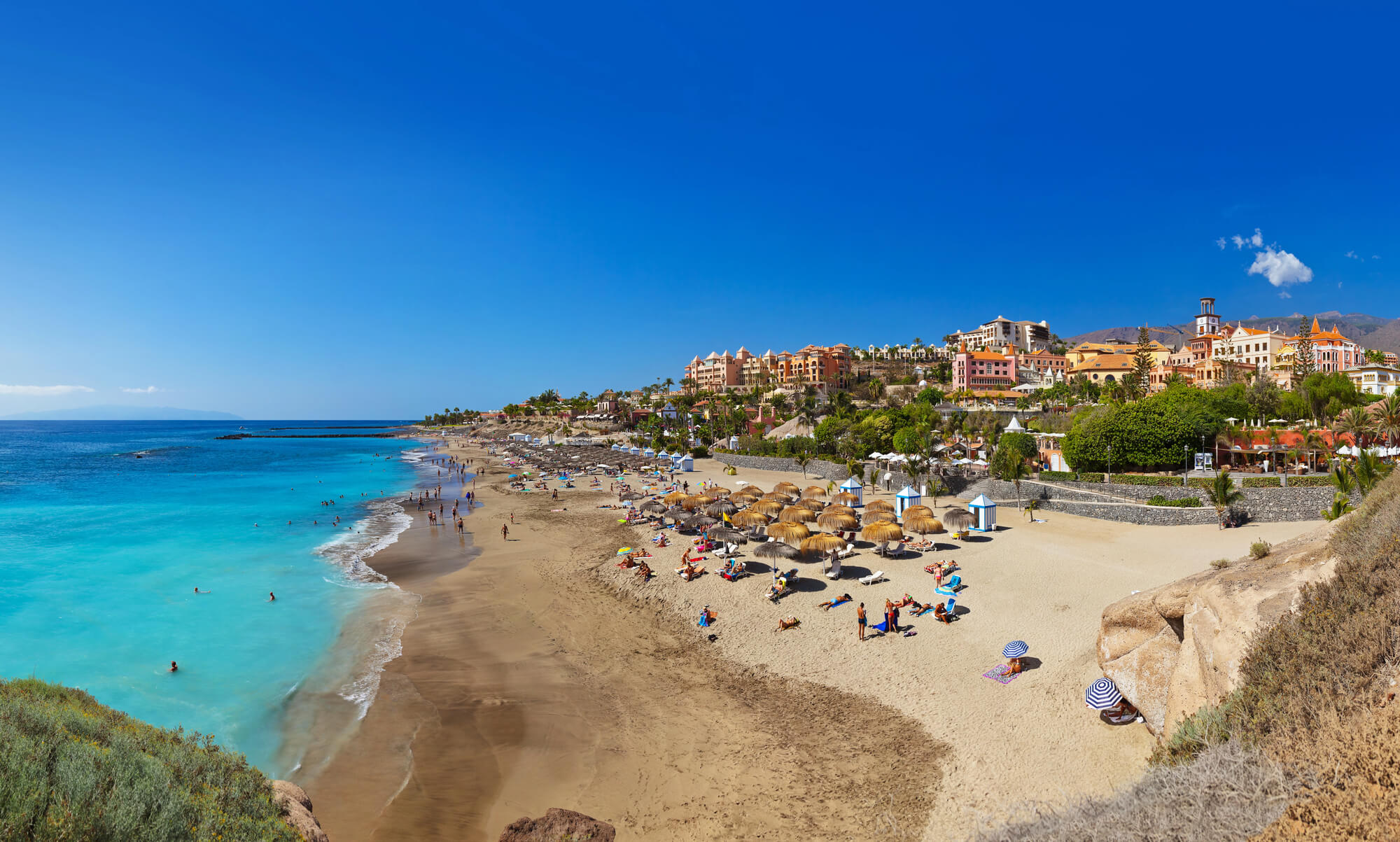
Las Teresitas just outside Santa Cruz, is wide with golden sand and on weekdays, it’s full of local families rather than tourists. Playa de las Vistas in Los Cristianos is clean and both these beaches are good for swimming as well as for children. The sand at Teresitas was actually shipped over from the Sahara in the 1970s which is why many find it strange that beaches on the island have varying sand colours.
That said, some of those darker beaches in the north are the ones that stand out as well. Playa de Benijo, up near Anaga, is one of the most dramatic beaches and is the set for many photographer for model shoots or landscape images. It’s wild and windy but the light there in the late afternoon just as the sunset is rolling closer, is something special and stays with you.
Star Wars Was Filmed Here
Tour guides have been saying this for decades but it’s not true because Tenerife has a Film Commission that keeps records of every production shot on the island, and Star Wars isn’t on it, neither is Planet of the Apes which is the other one that comes up.
What actually was filmed here?
- Clash of the Titans
- Fast and Furious 6
- Several episodes of Doctor Who, with scenes shot in Teide National Park and Garachico
- Jason Bourne
- Rambo V
That’s a good list without needing to invent anything and I genuinely don’t know why the Star Wars myth has such staying power, but now you can politely correct whoever brings it up.
Tourism Has Ruined It
I hear this from people who visited twenty years ago and are convinced everything’s gone downhill. And look, mass tourism has changed things. That’s not nothing. But “ruined” misses something important about the island’s geography.
The resort areas in the south were built on land that wasn’t much use to anyone historically. A few fishing families, some scrubland. The road didn’t even reach the southern settlements until the 1940s. The Canarian towns where people actually live, and have always lived, are mostly separate from all of that. They’re still there. They still feel like themselves.
If you go to La Orotava on a Tuesday morning, walk around Garachico, then drive up into the Anaga mountains and find a village where the bar opens at 10am and closes when the owner feels like it, you’ll notice something. Tourism hasn’t touched those places in any meaningful way and you just have to go looking because there are many locations like this on the island.
There’s Nothing to Do Except the Beach
This is the one that bothers me most, because it’s kept genuinely curious people away from something they’d love.
La Laguna is a UNESCO World Heritage city with colonial architecture so well-preserved that historians say the Spanish essentially practised their building methods here before taking them to the Americas. The Anaga Rural Park in the northeast is an ancient laurel forest, cool and misty and completely unlike anything else on the island. The Teide Observatory sits above the clouds and is considered one of the best stargazing spots in the world, something the astronomical community has been saying for years and the site is worth reading if you’re into that sort of thing.
There are wine regions here producing bottles that would genuinely surprise you. A food scene with Michelin stars. The Santa Cruz Carnival in February is the second largest in the world after Rio, and if you’ve never been, the scale of it is something you can’t really prepare for.
You can come here and do nothing but swim and eat and sleep. That’s a perfectly good holiday. But if someone tells you there’s nothing to do beyond the beach, they haven’t looked.
What the Real Version Looks Like
The myths exist because most people only ever see one version of Tenerife. They stay in the same resort, eat in the same places, come home with a fixed idea of what the island is and end up spreading the word.
The real thing is more interesting than the brochure and boasts of ancient forests and volcanic moonscapes, tiny bars where nobody speaks English, and good wine that costs a couple of euros. A history that goes back to the Guanche people, long before the Spanish arrived, and a culture that’s never quite shaken that.
For the kind of ground-level, no-nonsense information that travel sites usually skip, The Tenerife Forum is one of the few places online where people will tell you what things actually cost and whether the bus actually runs on time.
It’s not perfect. Nowhere is. But it’s worth knowing properly, and that starts with knowing which version of it you’ve actually been sold.


