




Visitors often feel underwhelmed by Tenerife because they never actually leave the resort, ate in the same strip of restaurants, and then went home and said it was “fine.”
I’ve seen this happen often with visitors so I’ll just write a quick article about what Tenerife is actually like when you step outside the postcard version of it.
The North Feels Like a Different Island
Somewhere on the drive north, the island changes on you. You can’t quite put your finger on when it happens but at some point the air is cooler, properly cooler, and everything outside has gone this deep saturated green. The roads narrow down to almost nothing in places and the towns feel older, quieter, like they’ve just been getting on with it long before anyone thought to visit.
Puerto de la Cruz is up in all of that and I’d tell anyone to go. Not in a vague way, in a genuine one. It’s got an old town that actually functions, a harbour with boats that are there for working rather than looking at, and on Sunday mornings a market where people are buying vegetables and arguing about prices rather than posing for anything. You can just walk around it. Nobody’s trying to sell you an experience.
The Lago Martianez is the one thing I’d push even on people who’ve switched off at the words seafront lido. I know how it sounds. César Manrique designed it in the sixties out of volcanic rock and saltwater pools and it shouldn’t work as well as it does but it really does. There’s no single moment where you think right, I’ve seen it, I can go now. You just keep finding another spot to sit. I went in the morning and stayed until I was hungry and hadn’t once looked at my phone. That’s about as good a recommendation as I can give anything. Go early, before it fills up, and don’t make plans for after.
Teide Is Worth the Effort, But Do It Properly
Everyone says go to Teide and honestly, they’re not wrong. But most people get up there and do the same thing. They pull into the car park, take a few photos through the window or just outside it, and head back down feeling like they’ve done it. They haven’t really. That’s just a car park at altitude.
The national park around the volcano is one of those places I’ve genuinely struggled to describe to people afterwards. The air at 2,000 metres is thin and properly cold even when it’s baking on the coast below, and the silence up there is the kind you don’t really have a frame of reference for until you’re in it. Not just quiet. Silent in a way that makes you realise you almost never actually get that.
The cable car gets you up to just below the summit which is worth doing on its own. If you want to go all the way to the top you’ll need a permit, it’s free but you have to book it in advance through the Spanish National Parks website and they go fast. Don’t think you’ll sort it out the week before you travel. You probably won’t get one.
The summit itself, if you do get there, has a view down to both coasts that I genuinely don’t know how to describe without it sounding like I’m laying it on thick. I’m not. It’s just one of those views.
Go early. The clouds come in by midday most days and when they do the views are gone, completely. I’ve been up there in the cloud and it’s a different trip entirely.
What a Guachinche Actually And Why You Should Find One
A guachinche is a small, informal place for food that is more common in the north where a local family serves home cooked food alongside wine they’ve made themselves. They’re not restaurants in any formal sense but can even be someone’s garage with six tables and a handwritten menu on a chalkboard, but sometimes there’s no menu at all and you just eat what they’re cooking that day.
You find them by driving the back roads in the north, looking for handwritten signs, or asking someone locals. We’ve written an article about guachinches to help visitors on their journey of discovery of the island.
The Villages That Don’t Make It Into the Brochures
Masca gets spoken about a lot now but the sheer beauty of the landscape and those houses hanging off the cliffs in the Teno mountains are still worth the drive up as long as you get there before the tour buses do.
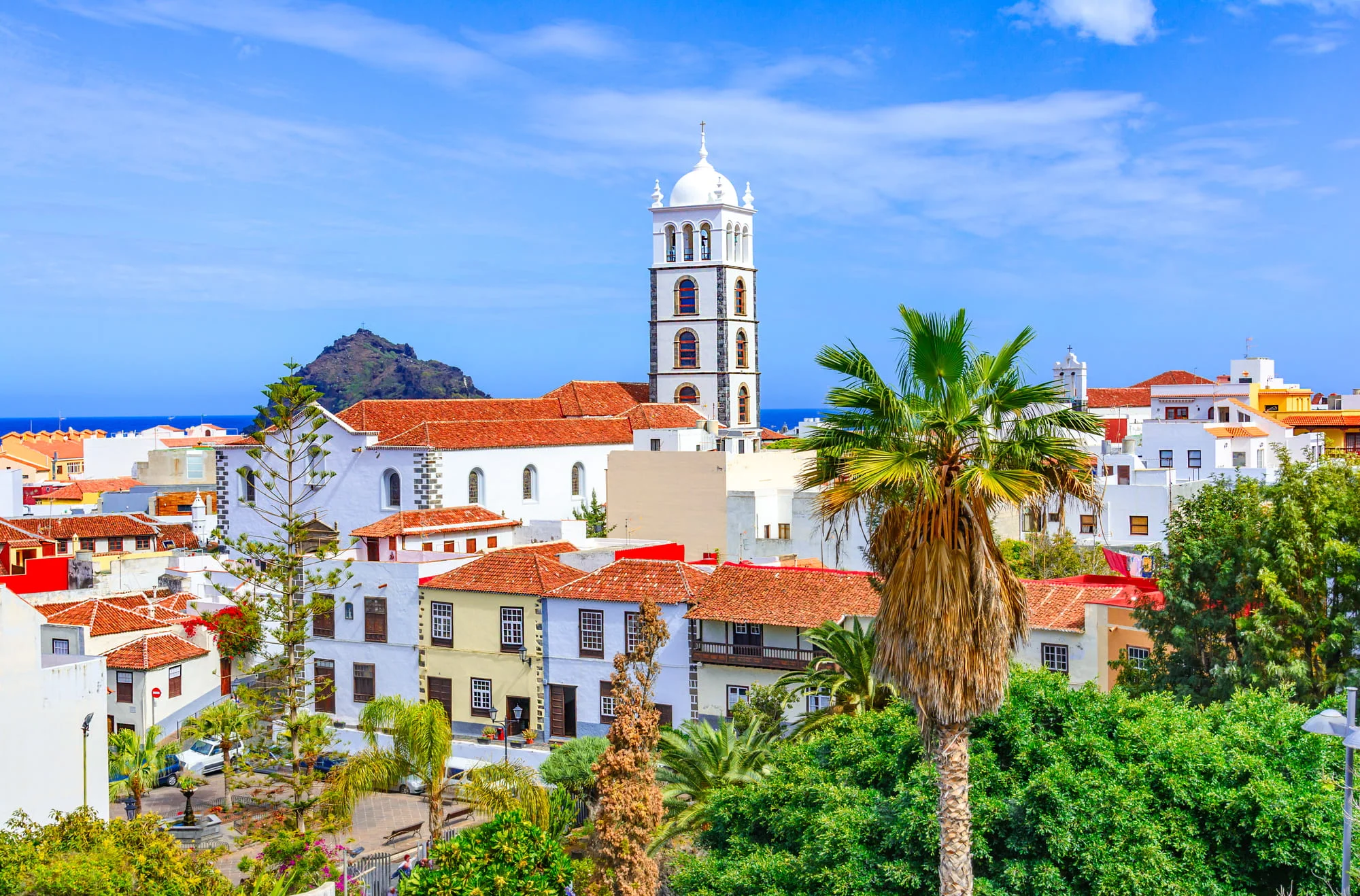
Garachico is on the north west coast of the island and in 1706, a volcanic eruption almost wiped it out and what’s there now has been rebuilt from the lava, and the rock pools that the same eruption carved out are now a popular swimming area on the seafront. There’s an old convent and a main square with a bar where people actually sit outside in the afternoon, but the town just has this quality and purity about it that makes is authentic.
Vilaflor is worth a detour too. It’s the highest village in Spain, up in the pine forests in the south, and the smell up there is something else. Pine resin and cool air and nothing else. There’s a walking trail through the forest that takes you past ancient Canarian pines, some of them hundreds of years old, and the quiet up there is the good kind.
The Anaga Park, Which Most People Drive Past Without Stopping
The Anaga Rural Park in the north east corner of the island is really worth a visit if you have the time to make the trip. It’s a UNESCO Biosphere Reserve and the laurel forest that covers it has been there since before the last ice age and you can feel that when you’re walking through it. The trees are old and gnarled in the way that only genuinely ancient things are, while the paths are mossy and a bit damp underfoot and the light filters through the canopy in a way that makes everything look slightly unreal.
It does get misty up there which only makes it better and is about 45 minutes from Santa Cruz, so most people tend to drive straight past the turning on their way somewhere else without really noticing.
What Tenerife Is Actually Good For Besides the Beach
Walking, eating properly, driving through places that don’t have an English menu, sitting in a square in a town that isn’t trying to sell you anything. That’s what Tenerife is good for when you get past the resort version of it.
There are over 1,400 kilometres of marked walking trails on the island, so you’re not short of options. A good one to start with is the coastal path between Los Gigantes and Playa de la Arena which is flat, easy going, and takes about 45 minutes each way.
The cliffs at Los Gigantes are among the tallest sea cliffs in Europe but you don’t really get a sense of them from the top looking down. There are small boat trips leaving from the harbour that don’t cost much, and seeing those cliffs from sea level is one of those things you’ll be quietly pleased you made the effort for.
One Honest Thought Before You Go
Tenerife has a way of opening up for people who are willing to let things get a little unplanned. The ones who take a wrong turn and end up somewhere they can’t pronounce, or pull over at a roadside stall selling local cheese just because it caught their eye, or wander into a bar where nobody speaks English and just smile and point at whatever the person next to them is having, that side of the island is always there waiting. It just won’t come and find you if you don’t go looking for it.


