



You’ve got the time off approved, a rough budget in mind, and absolutely no idea where to go without it turning into a logistical nightmare. That’s what this article actually solves.
Not every trip needs to be a test of endurance. Some countries just click. The transport works. The food is everywhere and it’s good. Getting lost doesn’t spiral into a three-hour ordeal involving a crumpled map and a mild panic attack outside a train station. These are those countries, and they’re better than most people give them credit for.
Japan Is Easier Than Everyone Says It Is
The reputation puts people off. Different alphabet, strict social rules, a train network that looks like someone spilled spaghetti across a map. But Japan might genuinely be the most foreigner-friendly country on the planet once you’re actually inside it.
Here’s what nobody tells you before you go: the infrastructure is so good that it almost does the thinking for you. Stations have English signs. Vending machines have pictures. Google Maps works perfectly on the Tokyo metro, including real-time departures. I stood at Shinjuku station once, which handles over three million passengers a day and looks absolutely terrifying from the outside, and thought: this is actually easier than the London Underground. And I meant it.
The food thing deserves its own moment. You’ll eat from a vending machine at midnight and it’ll be genuinely good. You’ll point at a plastic model in a restaurant window and whatever arrives will be better than you expected. The Japan National Tourism Organization has solid planning tools if you want a starting point, but you could honestly land with a vague itinerary and find your feet within a day.
One thing worth knowing before you go: carry cash. Japan is still largely a cash society outside the big cities, and getting caught without yen is the one easily avoidable mistake most first-timers complain about.
Portugal: The Country That Doesn’t Try Too Hard
Portugal is easy in a quiet, understated way. Nobody’s aggressively selling you anything. The pace is slow. And for English speakers, the language barrier is barely a barrier at all.
Lisbon is the obvious entry point and it’s genuinely good in the way that cities with good bones and cheap coffee tend to be. The trams are slow but they work. Uber functions perfectly. And if you want to get to Porto, a two-hour train ride on the Alfa Pendular costs less than a taxi from Heathrow and cuts through countryside that makes you want to get off at a random stop and just stay.
Now, the food. A pastel de nata, fresh from the oven, has a warm, eggy, slightly caramelised smell that hits you before you even see it. The custard is soft in the middle, the pastry is shatteringly crisp, and they cost about a euro each. I’m not including that to be atmospheric. I’m including it because it’s the thing I think about most when I think about Portugal, and I’ve been five times now.
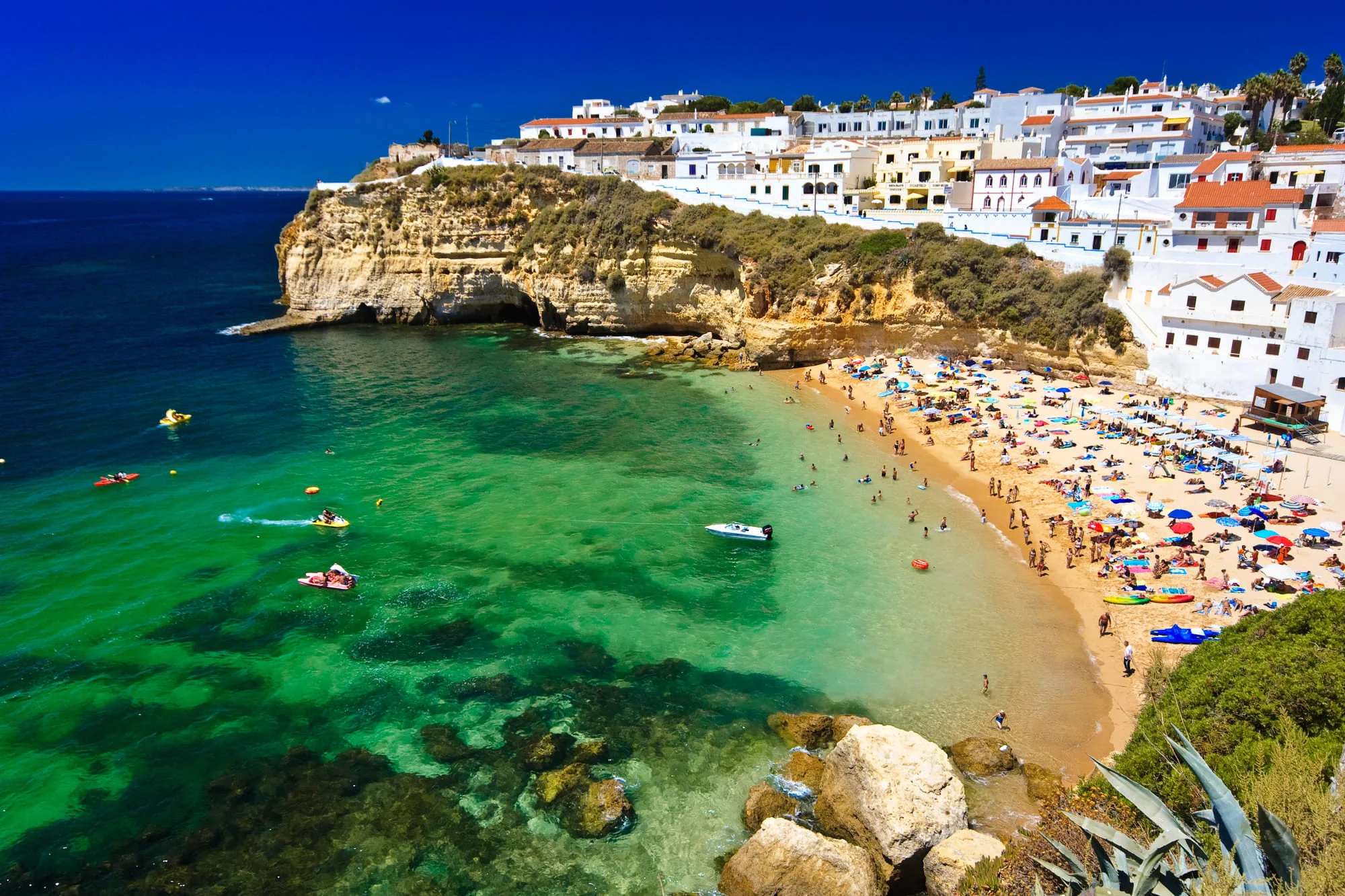
Driving is easy too. Roads are well-signposted. Traffic is light outside Lisbon. The Algarve coastline along the south is the kind of place where you can rent a small car, drive for four days with no fixed plan, and feel like you’ve properly used your annual leave.
Georgia Is the One Most People Haven’t Considered
Not Georgia the American state. Georgia the country, sitting between Russia and Turkey, with a cuisine so good that serious food writers lose their composure over it and a capital city, Tbilisi, that smells like wood smoke and baking bread in the early morning.
It’s easy for several reasons. It’s small, you can cross it in a day if you need to. It’s genuinely affordable in a way that surprises people. And the people are so warm that it occasionally feels overwhelming. There’s a concept in Georgian culture sometimes translated as “a guest is a gift from God,” and while that sounds like a tourism slogan, it plays out in real life in ways that catch you off guard. You’ll be invited to eat with strangers. Probably more than once.
Actually, I should mention this before I forget: Georgia has a wine culture going back eight thousand years, and the natural wines made in clay vessels called qvevri taste completely unlike anything you’ll find in a European wine shop. That alone is worth the trip for certain people.
Getting around is straightforward. Marshrutky, the shared minibuses, cover the whole country for very little money. Taxis in Tbilisi are cheap. The city rewards aimless walking in a way that few places do.
New Zealand Is What Easy Travel Actually Looks Like
New Zealand is expensive. I want to say that clearly before anything else, because articles about New Zealand tend to bury that fact in the middle, and you deserve to know upfront.
But within that: it’s one of the easiest countries in the world to travel. English is the language. The roads are good and well-signed. The distances between interesting things are driveable. And the landscape does something strange to people. There’s a particular quality to the light in the South Island in late afternoon, golden and flat, hitting the mountains sideways, that feels almost edited. Like someone turned a setting up.
Self-driving is the move. Hire a car, book accommodation loosely, and follow the road. The Tourism New Zealand website has honest information about driving times and realistic itineraries, which I appreciate because most tourism boards quietly lie about how long things actually take.
The people help too. New Zealanders are friendly in a way that doesn’t feel performed. Stop to ask for directions and there’s a reasonable chance you’ll end up with a better route and a lunch recommendation thrown in.
Vietnam: Long Country, Short Learning Curve
Vietnam looks complicated. It’s thin and long and runs through three distinct climate zones and about fifteen regional cuisines. But the tourist route from Hanoi down to Ho Chi Minh City is so well-worn that first-time solo travellers navigate it without much trouble every single day.
The food is the reason to go. Not the weather, not the beaches, though both are good. The food. A bowl of pho at six in the morning in Hanoi, eaten at a plastic stool on the pavement while motorbikes flow past and the air smells like both exhaust and star anise at the same time, is one of those meals that rewires something in your brain. You’ll think about it for years. I still do.
Transport is simple enough: buses, overnight trains, and budget domestic flights connect everything. Grab, Southeast Asia’s version of Uber, works across every city. Guesthouses are cheap and generally decent. And while the language is genuinely hard, a bit of Google Translate and a willingness to point at things gets you further than you’d expect.
The one thing that catches people out is crossing the road in Hanoi. There’s no real trick to it, you just walk at a steady pace and the motorbikes flow around you. Stopping in the middle is the mistake. Keep moving, stay calm. I know that sounds ridiculous if you haven’t done it, but trust me on this one.
Spain: So Good It Barely Needs Defending
Spain is almost too obvious for a list like this. But it keeps earning its place because it’s genuinely, consistently good in ways that other popular destinations simply aren’t.
The food culture makes travel there easy in a way that’s hard to explain until you’ve experienced it. You’ll never be far from something worth eating. Tapas bars open late, stay open late, and feed you well for very little money. The coffee is strong and cheap, and in some regions it comes automatically with something small to eat alongside it, which still feels like a small gift every time.
High-speed rail between Madrid, Seville, Barcelona, and Valencia is fast, comfortable, and well-priced if you book ahead. The cities are walkable. Locals in tourist areas have seen enough visitors to be patient and helpful, and outside tourist areas, a few words of Spanish go a long way. Even bad Spanish, delivered with some genuine effort, lands better than loud English delivered very slowly.
And the variety within one country is worth saying out loud: beach towns, mountain villages, big complicated cities, and stretches of dry interior that look like they haven’t shifted in fifty years. You can go back five times and not repeat yourself.
What Actually Makes a Country Easy to Travel
It comes down to a few things that don’t always get said directly.
Language accessibility matters. Not because you can’t travel without speaking the local language, but because when English is spoken in tourist areas, even imperfectly, the cognitive load of every interaction drops. You stop spending energy on translation and start noticing where you actually are.
Functioning infrastructure matters more than people admit. Clean, reliable public transport doesn’t just move you from A to B. It removes an entire category of stress from your day. You stop arriving places tired and irritated, and you start arriving curious.
Safety plays a role too, but not quite in the way people usually frame it. It’s less about crime statistics and more about whether you feel relaxed enough to wander. A lot of travel fatigue comes from low-level vigilance, that constant slight alertness of not quite knowing if you’re in a situation. Countries where that feeling is rare are the ones where travel actually feels like rest.
Questions People Actually Ask About This
What’s the easiest country to visit for the first time?
Portugal or Japan, depending on your budget. Portugal if you want something close, relatively cheap, and gentle. Japan if you want something completely different that somehow still works perfectly.
Do I need to speak the language before I go?
Not fluently. But learning ten words in the local language before any trip changes how people respond to you. It signals respect, and people notice. It takes twenty minutes on Duolingo. Just do it.
Isn’t “easy” travel just less authentic?
No. That’s a story people tell themselves to justify bad trips. Easy logistics means you spend more of your mental energy on the actual experience, not on surviving it. Authenticity comes from how you engage with a place, not how hard it was to reach.
Which of these countries is best for solo travel?
Vietnam and Portugal are both excellent for solo travellers. Vietnam for the energy and the ease of meeting people on the road. Portugal for the pace, the safety, and the fact that being alone there never feels lonely for long.
The countries on this list won’t hold your hand. But they’ll stop fighting you. And sometimes that’s all the difference between a trip you carry home warmly and one you just survived and called “fine.”
Go somewhere that lets you actually be there.


