




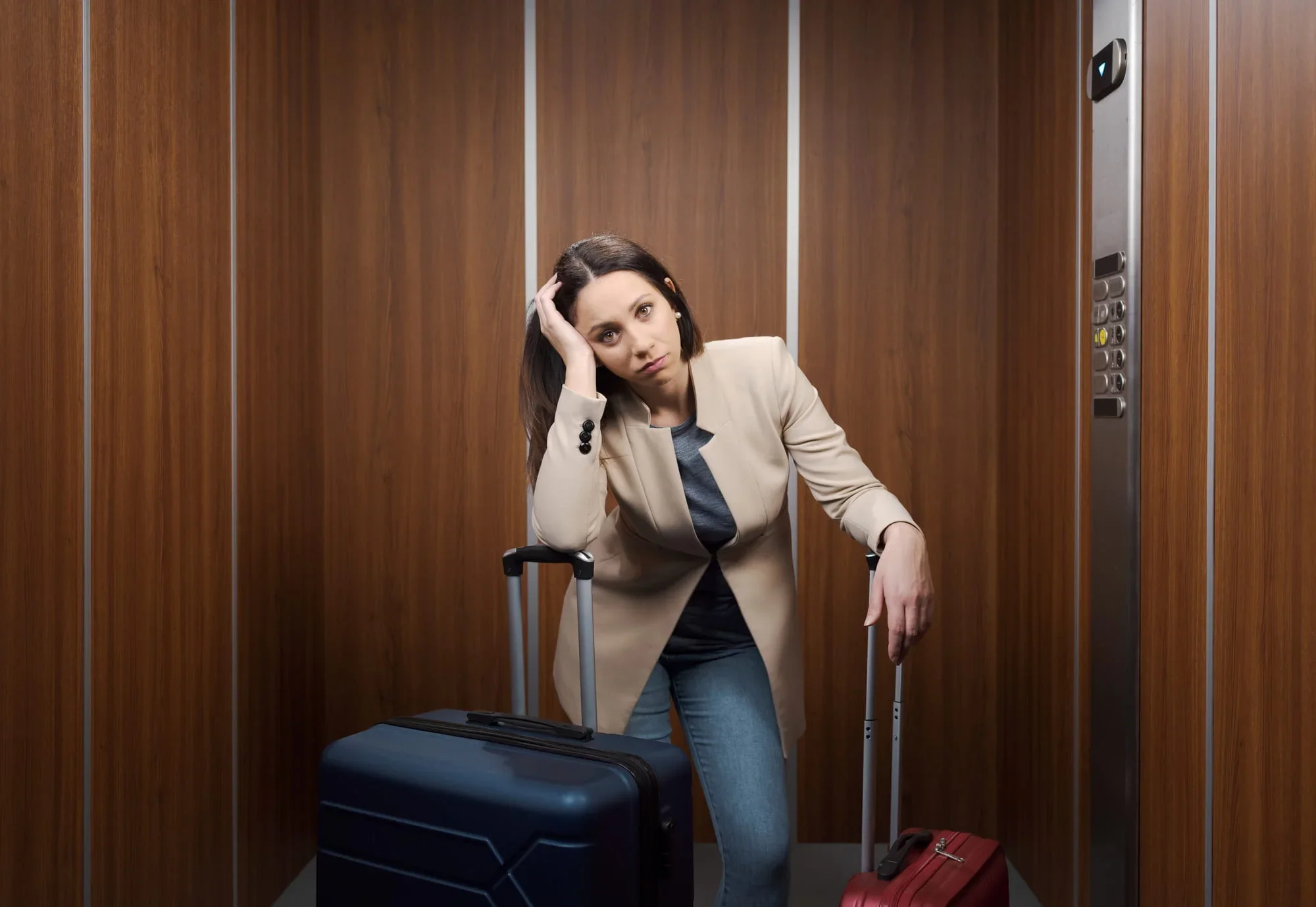
We all know that the hollow feeling we experience when we get back from our travel isn’t tiredness, it’s something else and it usually hits harder than anyone warned you it would.
The Thing Nobody Says Out Loud
You did everything you planned to do and saw a better version of yourself come through and now you’re home, standing in your kitchen at 9pm on a Tuesday, wondering why everything feels slightly grey.
It’s not depression nor is it ingratitude. It’s not some sign that you need to quit your job and move abroad either although you won’t pretend that thought doesn’t cross your mind a few days later.
What it actually is, is your nervous system catching up with the fact that the good bit is over. And the reason it feels so strange is that the contrast is doing most of the work.
Your Brain Was Running Differently While You Were Away
Travel where you’re somewhere unfamiliar and your senses are actually switched on and puts your brain into a state it rarely gets into at home because everything is new. You don’t know where things are, so you’re paying attention and present in a way that most of us genuinely aren’t during a normal week at home.
It feels like being alive in a more deliberate way and when you come back, your brain doesn’t just flick back to standby mode, it notices that nothing is new and sort of reduces its frequency.
The psychological term for the return version of this is reverse culture shock and research into re-entry adjustment has shown it can sometimes be harder to process than arriving somewhere new. It makes sense because when arriving somewhere new, you expect to feel disoriented, but when coming home, you expect to feel fine.
Why Home Feels Smaller Than You Left It
Here’s the thing that took me a while to put into words.
When you’re travelling, you’re operating on possibility. Every morning you wake up and something could happen. You could talk to someone interesting. You could eat something you’ve never tried before. You could get lost and it turns out to be fine, actually better than fine. The day is genuinely open.
At home the day is not open like it is during your trip because its filled with chores, work and a routine.
Ordinary life has real value and after a few weeks away, most people start quietly craving the ordinary. That first week back before you’ve found your footing again has a contrast between the time frames that a quite stark.
The flat didn’t get smaller. You just got briefly bigger, and you haven’t quite fitted back into your shape yet.
How Long Does This Actually Last
It depends on two things more than anything else. How long you were away, and what you’re coming back to.
A fortnight away usually means a few days of readjustment but a month or more, and you might be looking at a couple of weeks. Not weeks of misery, but just weeks of things feeling slightly off and slightly less than they were.
The other thing that people underestimate is what’s waiting for them at home when they return because people who return to something they care about like a project or a relationship, tend to settle back in faster. People who come back to a life that felt a bit hollow before they left are the ones who really struggle. The trip didn’t cause the problem, it just made it more visible.
I should mention, because it’s actually worth knowing, that if the low feeling after travelling is persisting beyond two or three weeks and genuinely affecting your day-to-day life, that’s worth talking to someone about. The Mental Health Foundation has some clear, practical guidance on exactly this kind of emotional transition. Not everything that feels bad is a crisis, but some things do need more than a good sleep and a decent meal.
What the First Few Days Back Actually Need
Not productivity. Not catching up. Not throwing yourself back into your routine to “get back on track.” That instinct is understandable but it usually makes things worse.
What the first few days back actually need is a bit of decompression. If you can buffer even one day between landing and going back to work, do it. Use it to unpack properly, sleep at a normal time, eat something you actually want to eat, and let yourself be home before you have to perform being home.
Also, and this is something I’d genuinely forgotten to do until a friend pointed it out to me once, write something down about the trip before the memory starts to flatten. Not a big journal entry. Just a few lines about what it smelled like, what surprised you, what you’d do differently. It sounds small but it does something useful. It tells your brain: that happened, it was real, and it’s okay to put it down now.
The Part About Other People Not Getting It
You’re going to try to explain the trip to someone and it’s not going to land.
Not because they don’t care. Because they weren’t there. And some experiences genuinely don’t compress into conversation. The late afternoon light on the water, the meal that cost almost nothing and was somehow perfect, the specific quality of silence on a walk you took alone. These things exist in your memory as full, dimensional things. They come out of your mouth as flat summaries and you can see in the other person’s face that they’re hearing something different from what you’re trying to say.
What Actually Helps (and What Doesn’t)
Booking another trip immediately doesn’t help either because although it feels like it will, It won’t. It just defers the feeling and adds a layer of anxiety about money on top of it.
What does help, at least a bit, is finding something to look forward to that doesn’t require a plane. A dinner somewhere you’ve been meaning to try. A long walk somewhere with good air. Something on the calendar, even something small, because the brain needs a horizon. Without one, being home just looks like being stuck.
Cooking food from where you were can help more than you’d expect and I know that sounds like something from a lifestyle magazine. I’m aware of the irony but there’s something genuinely grounding about it. The smell of a specific spice and the process of making something with your hands, connects the two versions of your life instead of just setting them in opposition.
And give it time. Not a fixed amount of time. Just time. The feeling does ease. The ordinary starts to feel good again, sometimes even good in ways you couldn’t access before you left. That’s the part nobody tells you either: sometimes going away is what makes coming home worth something.
One Last Thing
Returning home is supposed to feel strange because you left as one version of yourself, something happened while you were away, even if you can’t quite name it, and now you’re back. A lot of changes take place without you fully understanding it and it’s when you get home that you realise the changes you’ve experienced.
Be easy on yourself for a few days. The life you came back to will still be there once you’ve landed in it properly.
Written by someone who knows the airport feeling, the kitchen feeling, and the vague Tuesday feeling. All three are real. All three pass.


